• Home
  • Latest
  • Fortune 500
  • Finance
  • Tech
  • Leadership
  • Lifestyle
  • Rankings
  • Multimedia

Trendingnow

1

Jeff Bezos wants the bottom half of earners to pay zero income tax—he says nurses making just $75K should save $12K a year

2

Indeed chief economist says we’re entering an era of ‘great mismatch’ thanks to a generational imbalance of workers

3

Microsoft reports are exposing AI's real cost problem: Using the tech is more expensive than paying human employees

1

Jeff Bezos wants the bottom half of earners to pay zero income tax—he says nurses making just $75K should save $12K a year

2

Indeed chief economist says we’re entering an era of ‘great mismatch’ thanks to a generational imbalance of workers

3

Microsoft reports are exposing AI's real cost problem: Using the tech is more expensive than paying human employees
Peter Thiel

Peter Thiel on the challenge of the future

By
Peter Thiel
Peter Thiel
and
Blake Masters
Blake Masters
Down Arrow Button Icon
By
Peter Thiel
Peter Thiel
and
Blake Masters
Blake Masters
Down Arrow Button Icon
September 4, 2014, 7:03 AM ET
Peter Thiel, Zero to One Book
handout Armin Harris

Whenever I interview someone for a job, I like to ask this question: “What important truth do very few people agree with you on?”

This question sounds easy because it’s straightforward. Actually, it’s very hard to answer. It’s intellectually difficult because the knowledge that everyone is taught in school is by definition agreed upon. And it’s psychologically difficult because anyone trying to answer must say something she knows to be unpopular. Brilliant thinking is rare, but courage is in even shorter supply than genius.

Most commonly, I hear answers like the following:

“Our educational system is broken and urgently needs to be fixed.”
“America is exceptional.”
“There is no God.”

Those are bad answers. The first and the second statements might be true, but many people already agree with them. The third statement simply takes one side in a familiar debate. A good answer takes the following form: “Most people believe in x, but the truth is the opposite of x.” I’ll give my own answer momentarily.

MORE: Read Fortune’s cover story Peter Thiel’s contrarian strategy

What does this contrarian question have to do with the future? In the most minimal sense, the future is simply the set of all moments yet to come. But what makes the future distinctive and important isn’t that it hasn’t happened yet, but rather that it will be a time when the world looks different from today. In this sense, if nothing about our society changes for the next 100 years, then the future is over 100 years away. If things change radically in the next decade, then the future is nearly at hand. No one can predict the future exactly, but we know two things: It’s going to be different, and it must be rooted in today’s world. Most answers to the contrarian question are different ways of seeing the present; good answers are as close as we can come to looking into the future.

When we think about the future, we hope for a future of progress. That progress can take one of two forms. Horizontal or extensive progress means copying things that work—going from 1 to n. Horizontal progress is easy to imagine because we already know what it looks like. Vertical or intensive progress means doing new things—going from 0 to 1. Vertical progress is harder to imagine because it requires doing something nobody else has ever done. If you take one typewriter and build 100, you have made horizontal progress. If you have a typewriter and build a word processor, you have made vertical progress.

Peter Thiel, Blake Masters
Co-author Blake Masters (left) with ThielPhoto: Art Streiber for Fortune

At the macro level, the single word for horizontal progress is globalization—­taking things that work somewhere and making them work everywhere. China is the paradigmatic example of globalization; its 20-year plan is to become like the United States is today. The Chinese have been straightforwardly copying everything that has worked in the developed world: 19th-century railroads, 20th-century air conditioning, and even entire cities. They might skip a few steps along the way—going straight to wireless without installing landlines, for instance—but they’re copying all the same.

The single word for vertical, 0-to-1 progress is technology. The rapid progress of information technology in recent decades has made Silicon Valley the capital of “technology” in general. But there is no reason why technology should be limited to computers. Properly understood, any new and better way of doing things is technology.

Because globalization and technology are different modes of progress, it’s possible to have both, either, or neither at the same time. For example, 1815 to 1914 was a period of both rapid technological development and rapid globalization. Between the First World War and Kissinger’s trip to reopen relations with China in 1971, there was rapid technological development but not much globalization. Since 1971, we have seen rapid globalization along with limited technological development, mostly confined to IT.

This age of globalization has made it easy to imagine that the decades ahead will bring more convergence and more sameness. But I don’t think that’s true. My own answer to the contrarian question is that most people think the future of the world will be defined by globalization, but the truth is that technology matters more. Without technological change, if China doubles its energy production over the next two decades, it will also double its air pollution. If every one of India’s hundreds of millions of households were to live the way Americans already do—using only today’s tools—the result would be environmentally catastrophic. In a world of scarce resources, globalization without new technology is unsustainable.

New technology has never been an automatic feature of history. Our ancestors lived in static, zero-sum societies where success meant seizing things from others. They created new sources of wealth only rarely, and in the long run they could never create enough to save the average person from an extremely hard life. Then, after 10,000 years of fitful advance from primitive agriculture to medieval windmills and 16th-century astrolabes, the modern world suddenly experienced relentless technological progress from the advent of the steam engine in the 1760s all the way up to about 1970. As a result, we have inherited a richer society than any previous generation would have been able to imagine.

Any generation excepting our parents’ and grandparents’, that is: In the late 1960s, they expected this progress to continue. They looked forward to a four-day workweek, energy too cheap to meter, and vacations on the moon. But it didn’t happen. The smartphones that ­distract us from our surroundings also distract us from the fact that our ­surroundings are strangely old: Only computers and communications have improved dramatically since midcentury. That doesn’t mean our parents were wrong to imagine a better future—they were only wrong to expect it as something automatic. Today our challenge is to both imagine and create the new technologies that can make the 21st century more peaceful and prosperous than the 20th.

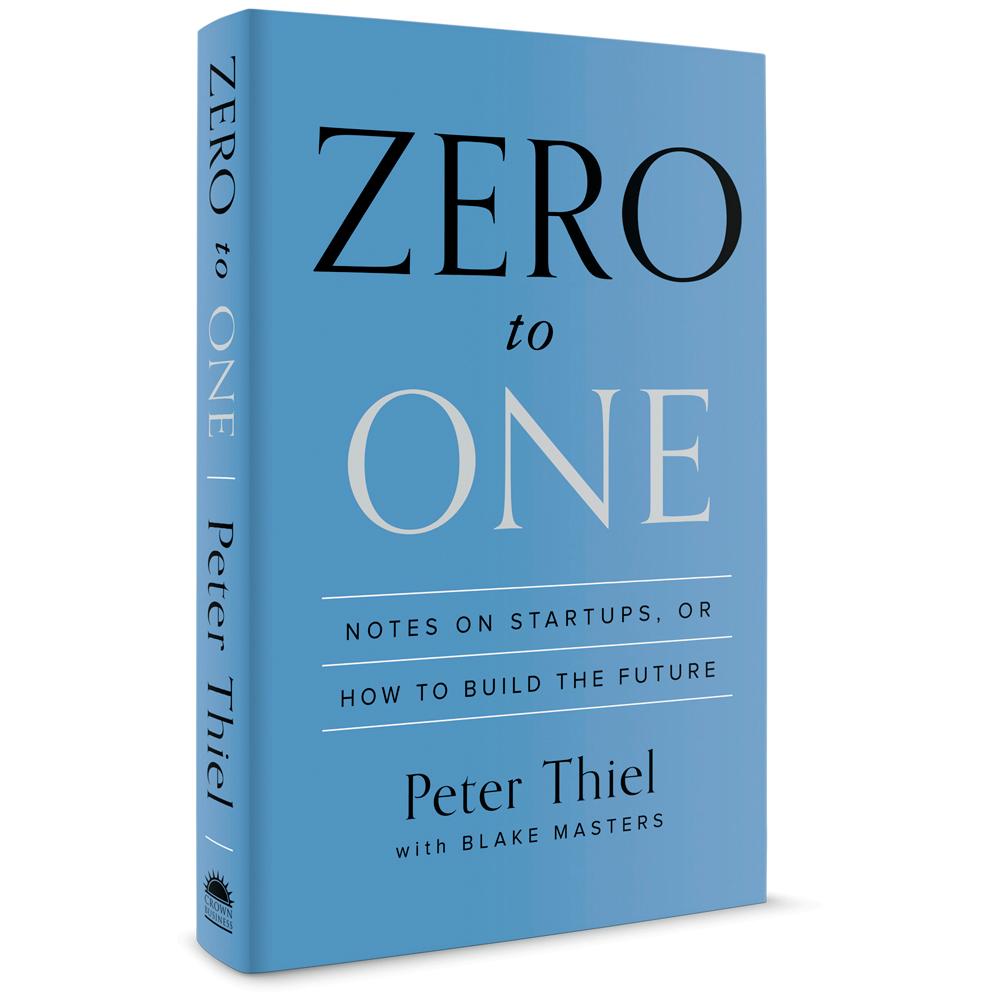
Excerpted from Zero to One, to be published on Sept. 16, 2014, by Crown Business, an imprint of Penguin Random House. Copyright © 2014 by Peter Thiel

About the Authors
By Peter Thiel
See full bioRight Arrow Button Icon
By Blake Masters
See full bioRight Arrow Button Icon

Latest in Features

Finance
Lorem ipsum dolor sit amet, consectetur adipiscing elit, sed do eiusmod tempor incididunt ut labore et dolore magna aliqua. Ut enim ad minim veniam
By Fortune Editors
October 20, 2025
Finance
Lorem ipsum dolor sit amet, consectetur adipiscing elit, sed do eiusmod tempor incididunt ut labore et dolore magna aliqua. Ut enim ad minim veniam
By Fortune Editors
October 20, 2025
Finance
Lorem ipsum dolor sit amet, consectetur adipiscing elit, sed do eiusmod tempor incididunt ut labore et dolore magna aliqua. Ut enim ad minim veniam
By Fortune Editors
October 20, 2025
Finance
Lorem ipsum dolor sit amet, consectetur adipiscing elit, sed do eiusmod tempor incididunt ut labore et dolore magna aliqua. Ut enim ad minim veniam
By Fortune Editors
October 20, 2025
Finance
Lorem ipsum dolor sit amet, consectetur adipiscing elit, sed do eiusmod tempor incididunt ut labore et dolore magna aliqua. Ut enim ad minim veniam
By Fortune Editors
October 20, 2025
Finance
Lorem ipsum dolor sit amet, consectetur adipiscing elit, sed do eiusmod tempor incididunt ut labore et dolore magna aliqua. Ut enim ad minim veniam
By Fortune Editors
October 20, 2025

Most Popular

Finance
Lorem ipsum dolor sit amet, consectetur adipiscing elit, sed do eiusmod tempor incididunt ut labore et dolore magna aliqua. Ut enim ad minim veniam
By Fortune Editors
October 20, 2025
Finance
Lorem ipsum dolor sit amet, consectetur adipiscing elit, sed do eiusmod tempor incididunt ut labore et dolore magna aliqua. Ut enim ad minim veniam
By Fortune Editors
October 20, 2025
Finance
Lorem ipsum dolor sit amet, consectetur adipiscing elit, sed do eiusmod tempor incididunt ut labore et dolore magna aliqua. Ut enim ad minim veniam
By Fortune Editors
October 20, 2025
Finance
Lorem ipsum dolor sit amet, consectetur adipiscing elit, sed do eiusmod tempor incididunt ut labore et dolore magna aliqua. Ut enim ad minim veniam
By Fortune Editors
October 20, 2025
Finance
Lorem ipsum dolor sit amet, consectetur adipiscing elit, sed do eiusmod tempor incididunt ut labore et dolore magna aliqua. Ut enim ad minim veniam
By Fortune Editors
October 20, 2025
Finance
Lorem ipsum dolor sit amet, consectetur adipiscing elit, sed do eiusmod tempor incididunt ut labore et dolore magna aliqua. Ut enim ad minim veniam
By Fortune Editors
October 20, 2025
Fortune Secondary Logo
Rankings
  • 100 Best Companies
  • Fortune 500
  • Global 500
  • Fortune 500 Europe
  • Most Powerful Women
  • World's Most Admired Companies
  • See All Rankings
  • Lists Calendar
Sections
  • Finance
  • Fortune Crypto
  • Features
  • Leadership
  • Health
  • Commentary
  • Success
  • Retail
  • Mpw
  • Tech
  • Lifestyle
  • CEO Initiative
  • Asia
  • Politics
  • Conferences
  • Europe
  • Newsletters
  • Personal Finance
  • Environment
  • Magazine
  • Education
Customer Support
  • Frequently Asked Questions
  • Customer Service Portal
  • Privacy Policy
  • Terms Of Use
  • Single Issues For Purchase
  • International Print
Commercial Services
  • Advertising
  • Fortune Brand Studio
  • Fortune Analytics
  • Fortune Conferences
  • Business Development
  • Group Subscriptions
About Us
  • About Us
  • Press Center
  • Work At Fortune
  • Terms And Conditions
  • Site Map
  • About Us
  • Press Center
  • Work At Fortune
  • Terms And Conditions
  • Site Map
  • Facebook icon
  • Twitter icon
  • LinkedIn icon
  • Instagram icon
  • Pinterest icon

Latest in Features

Anduril CEO Brian Schimpf
MagazineDefense
Inside Anduril: Meet the quiet engineer-CEO building America’s $31 billion weapons startup
By Allie GarfinkleMay 6, 2026
17 days ago
A Michigan farm town voted down plans for a giant OpenAI-Oracle data center. Weeks later, construction began
MagazineData centers
A Michigan farm town voted down plans for a giant OpenAI-Oracle data center. Weeks later, construction began
By Sharon GoldmanMay 6, 2026
17 days ago
The American Express CEO defied haters who said he’d never have the top job—winning with millennials and Gen Z and trouncing the competition
MagazineAmerican Express
The American Express CEO defied haters who said he’d never have the top job—winning with millennials and Gen Z and trouncing the competition
By Shawn TullyMay 6, 2026
17 days ago
Photo of Marc Benioff
Magazinecommunication
Salesforce CEO Marc Benioff turned his earnings call into a vodcast. Why other Fortune 500 CEOs might follow
By Rachel VentrescaMay 6, 2026
17 days ago
Intel Chief Exec, Lip-Bu Tan, on stage
EuropeIntel
Intel’s share price just blew the doors off. One man thinks he knows the reason why
By Kamal AhmedApril 27, 2026
26 days ago
Who owns ideas in the AI age?
MagazinePublishing
Who owns ideas in the AI age?
By Francesca CassidyApril 8, 2026
2 months ago

Most Popular

Jeff Bezos wants the bottom half of earners to pay zero income tax—he says nurses making just $75K should save $12K a year
Success
Jeff Bezos wants the bottom half of earners to pay zero income tax—he says nurses making just $75K should save $12K a year
By Preston ForeMay 21, 2026
2 days ago
Indeed chief economist says we’re entering an era of ‘great mismatch’ thanks to a generational imbalance of workers
Success
Indeed chief economist says we’re entering an era of ‘great mismatch’ thanks to a generational imbalance of workers
By Emma BurleighMay 22, 2026
1 day ago
Microsoft reports are exposing AI's real cost problem: Using the tech is more expensive than paying human employees
AI
Microsoft reports are exposing AI's real cost problem: Using the tech is more expensive than paying human employees
By Jake AngeloMay 22, 2026
24 hours ago
Apple’s Steve Wozniak says he cofounded the tech giant after 5 rejections from HP—not to ‘make money.’ For years, his paycheck was just $50
Success
Apple’s Steve Wozniak says he cofounded the tech giant after 5 rejections from HP—not to ‘make money.’ For years, his paycheck was just $50
By Preston ForeMay 22, 2026
1 day ago
Despite a $500 million net worth, Shaq just finished his fourth degree. He warns graduates: 'Your character will take you further than your resume'
Success
Despite a $500 million net worth, Shaq just finished his fourth degree. He warns graduates: 'Your character will take you further than your resume'
By Preston ForeMay 20, 2026
3 days ago
Bolt CEO says he let go of his entire HR team for creating problems that didn’t exist: ‘Those problems disappeared when I let them go’ 
Workplace Culture
Bolt CEO says he let go of his entire HR team for creating problems that didn’t exist: ‘Those problems disappeared when I let them go’ 
By Preston ForeMay 19, 2026
4 days ago

© 2026 Fortune Media IP Limited. All Rights Reserved. Use of this site constitutes acceptance of our Terms of Use and Privacy Policy | CA Notice at Collection and Privacy Notice | Do Not Sell/Share My Personal Information
FORTUNE is a trademark of Fortune Media IP Limited, registered in the U.S. and other countries. FORTUNE may receive compensation for some links to products and services on this website. Offers may be subject to change without notice.