• Home
  • Latest
  • Fortune 500
  • Finance
  • Tech
  • Leadership
  • Lifestyle
  • Rankings
  • Multimedia
FinanceBurger King

Is Burger King’s move to Canada a raw deal for U.S. taxpayers?

By
Eileen Appelbaum 
Down Arrow Button Icon
By
Eileen Appelbaum 
Down Arrow Button Icon
August 28, 2014, 12:24 PM ET
Bloomberg — Getty Images

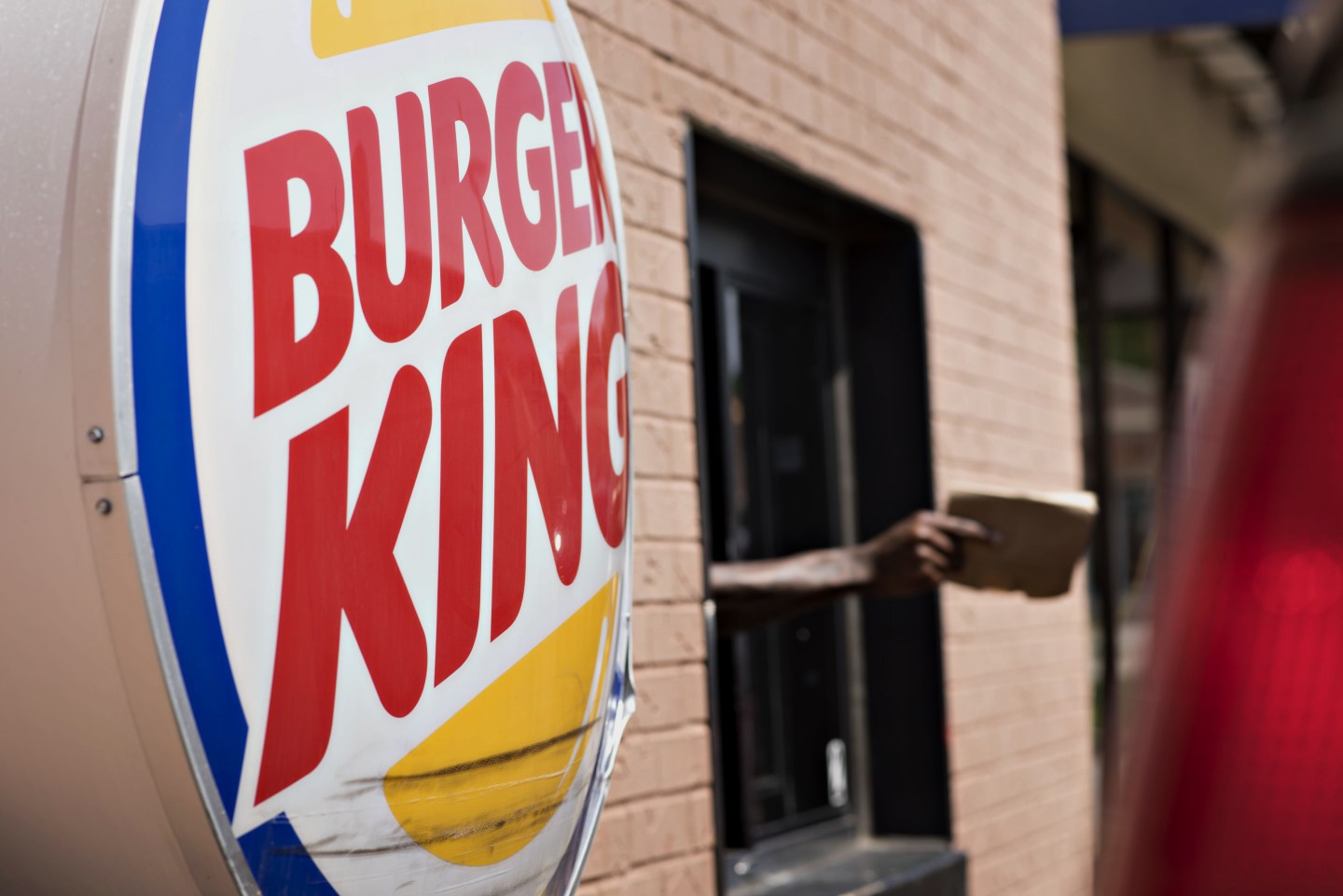
In a deal that has added fire to the controversy over American companies moving their headquarters abroad to secure lower tax rates, fast-food chain Burger King said this week that it plans to buy Canadian coffee-and-doughnut chain Tim Hortons for about $11 billion.

Under current tax law, such a move is perfectly legal; only the stigma attached to these so-called tax inversions have given companies pause. Burger King’s plans, though, could spur other franchises to follow suit, as tax inversions could be an especially tempting way to reduce U.S. tax liabilities for big franchises in the hospitality industry. Like tech or pharmaceutical firms that collect royalties or licensing fees from companies that use their intellectual property, franchise companies collect fees from locally owned establishments that use their brand. A tax inversion makes it easier to assign this fee income to a new ‘parent’ company in Canada or another lower tax jurisdiction. In Burger King’s case, the possibility exists that the company will be able to reassign the fees from its U.S. franchises to Canada and pay no U.S. tax on this income. Other taxpayers here in the U.S. will have to shoulder the burden and make up this shortfall in tax revenue.

Such tax maneuvers aren’t anything new. Many U.S. multinational corporations employ various strategies to pay fewer U.S. taxes. Pharmaceutical and other healthcare companies have figured out how to credit royalties and licensing fees for life saving drugs and devices developed with the support of U.S. taxpayer dollars to foreign subsidiaries in low tax jurisdictions. Another tax-dodging maneuver is to load up a company’s U.S. operations with debt owed to a foreign subsidiary. Interest paid on this debt “strips” income earned in the U.S. by the parent company. Because interest payments are tax deductible for corporations, this reduces the company’s U.S. tax liabilities on income earned in the U.S. Interest payments received by the foreign subsidiary are taxed, if at all, at the lower tax rate in the foreign tax haven. The problem for multinationals that use these tax dodges is that billions in profits earned in the U.S. are locked up in their offshore subsidiaries. They can’t be brought back to the U.S. and used to pay dividends to shareholders, for example, without triggering corporate income tax payments to the IRS.

With tax inversions, by reincorporating overseas and turning the foreign subsidiary into the “parent” company, at least on paper, the company is free to use its offshore cash however it wants without having to pay U.S. corporate taxes on the money. Private equity companies have a history of domiciling portfolio companies that do most of their business in the U.S. in the Cayman Islands or other tax havens. So it may not be surprising that it is Burger King (BKW), which was formerly private equity- owned and whose major shareholder is still the PE firm 3G Group, whose massive tax inversion deal breaks this mold. Most tax inversions involve a large U.S. multinational acquiring a small subsidiary, but Burger King and Tim Horton’s are both multi-billion dollar businesses with similar market capitalizations. Most tax inversions have been motivated by a desire to bring offshore profits back to the U.S., but Burger King doesn’t have much in the way of profits parked offshore.

Burger King executives have defended the deal by saying that plans to expand globally is what’s driving the deal rather than tax considerations, but tax experts are skeptical of this explanation. It seems the company just wants to pay lower taxes. In any case, if the deal is not met with customer resistance as Walgreen’s now-abandoned tax inversion plan was, it could lead other multinationals that directly serve consumers to renounce their U.S. citizenship to reduce their taxes.

This may be legal, but that doesn’t mean that it’s right. The corporate defense that companies need to do what’s best for their shareholders and take advantage of every loophole in the corporate tax code rings hollow when these companies employ an army of lobbyists to make sure that the tax code is riddled with loopholes.

Public outrage at the recent spate of tax inversions by high-profile multinationals that want to shift profits earned in the U.S. overseas to reduce their tax bill may finally overcome the clout of corporate interests and lead to action by Congress to limit the opportunities for engaging in this tax avoidance scheme. Treasury and the IRS are also considering measures to discourage tax inversions by making earnings ‘stripping’ illegal and eliminating some of the benefits of such deals.

Even before the Burger King deal was announced, the Congressional Joint Committee on Taxation estimated that the potential tax revenue the Treasury would lose to tax inversions over the next 10 years could amount to $19.5 billion. If not stopped soon, lost tax revenue from tax inversions may mount much higher. The country faces an urgent need to stop corporate inversions. This is one tax loophole that Congress should move quickly to close.

Eileen Appelbaum is a senior economist at the Center for Economic and Policy Research and a visiting professor at the University of Leicester in the United Kingdom.

About the Author
By Eileen Appelbaum 
See full bioRight Arrow Button Icon

Latest in Finance

Finance
Lorem ipsum dolor sit amet, consectetur adipiscing elit, sed do eiusmod tempor incididunt ut labore et dolore magna aliqua. Ut enim ad minim veniam
By Fortune Editors
October 20, 2025
Finance
Lorem ipsum dolor sit amet, consectetur adipiscing elit, sed do eiusmod tempor incididunt ut labore et dolore magna aliqua. Ut enim ad minim veniam
By Fortune Editors
October 20, 2025
Finance
Lorem ipsum dolor sit amet, consectetur adipiscing elit, sed do eiusmod tempor incididunt ut labore et dolore magna aliqua. Ut enim ad minim veniam
By Fortune Editors
October 20, 2025
Finance
Lorem ipsum dolor sit amet, consectetur adipiscing elit, sed do eiusmod tempor incididunt ut labore et dolore magna aliqua. Ut enim ad minim veniam
By Fortune Editors
October 20, 2025
Finance
Lorem ipsum dolor sit amet, consectetur adipiscing elit, sed do eiusmod tempor incididunt ut labore et dolore magna aliqua. Ut enim ad minim veniam
By Fortune Editors
October 20, 2025
Finance
Lorem ipsum dolor sit amet, consectetur adipiscing elit, sed do eiusmod tempor incididunt ut labore et dolore magna aliqua. Ut enim ad minim veniam
By Fortune Editors
October 20, 2025

Most Popular

Finance
Lorem ipsum dolor sit amet, consectetur adipiscing elit, sed do eiusmod tempor incididunt ut labore et dolore magna aliqua. Ut enim ad minim veniam
By Fortune Editors
October 20, 2025
Finance
Lorem ipsum dolor sit amet, consectetur adipiscing elit, sed do eiusmod tempor incididunt ut labore et dolore magna aliqua. Ut enim ad minim veniam
By Fortune Editors
October 20, 2025
Finance
Lorem ipsum dolor sit amet, consectetur adipiscing elit, sed do eiusmod tempor incididunt ut labore et dolore magna aliqua. Ut enim ad minim veniam
By Fortune Editors
October 20, 2025
Finance
Lorem ipsum dolor sit amet, consectetur adipiscing elit, sed do eiusmod tempor incididunt ut labore et dolore magna aliqua. Ut enim ad minim veniam
By Fortune Editors
October 20, 2025
Finance
Lorem ipsum dolor sit amet, consectetur adipiscing elit, sed do eiusmod tempor incididunt ut labore et dolore magna aliqua. Ut enim ad minim veniam
By Fortune Editors
October 20, 2025
Finance
Lorem ipsum dolor sit amet, consectetur adipiscing elit, sed do eiusmod tempor incididunt ut labore et dolore magna aliqua. Ut enim ad minim veniam
By Fortune Editors
October 20, 2025
Rankings
  • 100 Best Companies
  • Fortune 500
  • Global 500
  • Fortune 500 Europe
  • Most Powerful Women
  • Future 50
  • World’s Most Admired Companies
  • See All Rankings
Sections
  • Finance
  • Leadership
  • Success
  • Tech
  • Asia
  • Europe
  • Environment
  • Fortune Crypto
  • Health
  • Retail
  • Lifestyle
  • Politics
  • Newsletters
  • Magazine
  • Features
  • Commentary
Customer Support
  • Frequently Asked Questions
  • Customer Service Portal
  • Privacy Policy
  • Terms Of Use
  • Single Issues For Purchase
  • International Print
Commercial Services
  • Advertising
  • Fortune Brand Studio
  • Fortune Analytics
  • Fortune Conferences
  • Business Development
About Us
  • About Us
  • Editorial Calendar
  • Press Center
  • Work At Fortune
  • Diversity And Inclusion
  • Terms And Conditions
  • Site Map

© 2025 Fortune Media IP Limited. All Rights Reserved. Use of this site constitutes acceptance of our Terms of Use and Privacy Policy | CA Notice at Collection and Privacy Notice | Do Not Sell/Share My Personal Information
FORTUNE is a trademark of Fortune Media IP Limited, registered in the U.S. and other countries. FORTUNE may receive compensation for some links to products and services on this website. Offers may be subject to change without notice.


Most Popular

placeholder alt text
C-Suite
CEO of $90 billion Waste Management hauled trash and went to 1 a.m. safety briefings—‘It’s not always just dollars and cents’
By Amanda GerutJanuary 3, 2026
1 day ago
placeholder alt text
Success
Marriott’s CEO spoke out about DEI. The next day, he had 40,000 emails from his associates
By Ashley LutzJanuary 1, 2026
3 days ago
placeholder alt text
Future of Work
Bank of America CEO says he hired 2,000 recent Gen Z grads from 200,000 applications, and many are scared about the future
By Ashley LutzJanuary 3, 2026
21 hours ago
placeholder alt text
Success
Melinda French Gates got her start at Microsoft because an IBM hiring manager told her to turn down its job offer—'It dumbfounded me'
By Emma BurleighDecember 31, 2025
4 days ago
placeholder alt text
Energy
Trump makes it clear shocking Venezuelan regime change is largely about oil: ‘They stole our oil … We’re going to make a lot of money’
By Jordan BlumJanuary 3, 2026
15 hours ago
placeholder alt text
Success
Red Lobster’s 36-year-old CEO led the company after bankruptcy. Now he’s plotting the 'greatest comeback in the history of the restaurant industry'
By Sydney LakeJanuary 2, 2026
2 days ago

Latest in Finance

PoliticsVenezuela
Trump snatches Maduro but leaves his regime in charge for now
By Catherine Lucey, Eric Martin, Jamie Tarabay and BloombergJanuary 3, 2026
8 hours ago
PoliticsVenezuela
Deploying U.S. troops in Venezuela could become a ‘force protection nightmare’ amid potential insurgency threat, retired colonel warns
By Jason MaJanuary 3, 2026
10 hours ago
PoliticsVenezuela
Trump seeks to make Venezuela great again and revive its oil-based economy while affordability crisis lingers in the U.S.
By Jason MaJanuary 3, 2026
11 hours ago
An oil tanker is seen anchored in Lake Maracaibo after loading crude oil at the Bajo Grande Refinery port. The Trump administration seized the oil tanker off the coast of Venezuela. The vessel, which was on the Treasury Department's sanctions list and was sailing under the Guyanese flag, was on the US Treasury Department's sanctions list. The US president threatened to confiscate all hydrocarbon-laden vessels in the Venezuelan oil-producing nation.
EnergyVenezuela
Trump makes it clear shocking Venezuelan regime change is largely about oil: ‘They stole our oil … We’re going to make a lot of money’
By Jordan BlumJanuary 3, 2026
15 hours ago
PoliticsVenezuela
Trump says ‘we’re going to run’ Venezuela and is not afraid to put U.S. troops on the ground after Maduro’s capture
By Jason MaJanuary 3, 2026
16 hours ago
PoliticsVenezuela
What happens next in Venezuela? The regime’s foundation remains in place even after U.S. capture of Maduro, analyst says
By Jason MaJanuary 3, 2026
19 hours ago