• Home
  • Latest
  • Fortune 500
  • Finance
  • Tech
  • Leadership
  • Lifestyle
  • Rankings
  • Multimedia

Trendingnow

1

Mark Cuban says he has the solution to growing income inequality, and it's to reward every employee—from CEO to janitor—with company stock

2

‘I want to die broke’: Billionaire philanthropist Denny Sanford dies after giving away $4 billion

3

'Dr. Doom' Nouriel Roubini says we're headed for universal basic income or 'some form of socialism' as AI revolutionizes work—He calls that optimistic

1

Mark Cuban says he has the solution to growing income inequality, and it's to reward every employee—from CEO to janitor—with company stock

2

‘I want to die broke’: Billionaire philanthropist Denny Sanford dies after giving away $4 billion

3

'Dr. Doom' Nouriel Roubini says we're headed for universal basic income or 'some form of socialism' as AI revolutionizes work—He calls that optimistic
FeaturesMonsanto

Why Monsanto always wins

By
Dan Mitchell
Dan Mitchell
Down Arrow Button Icon
By
Dan Mitchell
Dan Mitchell
Down Arrow Button Icon
June 26, 2014, 4:03 PM ET
Monsanto GMO crops
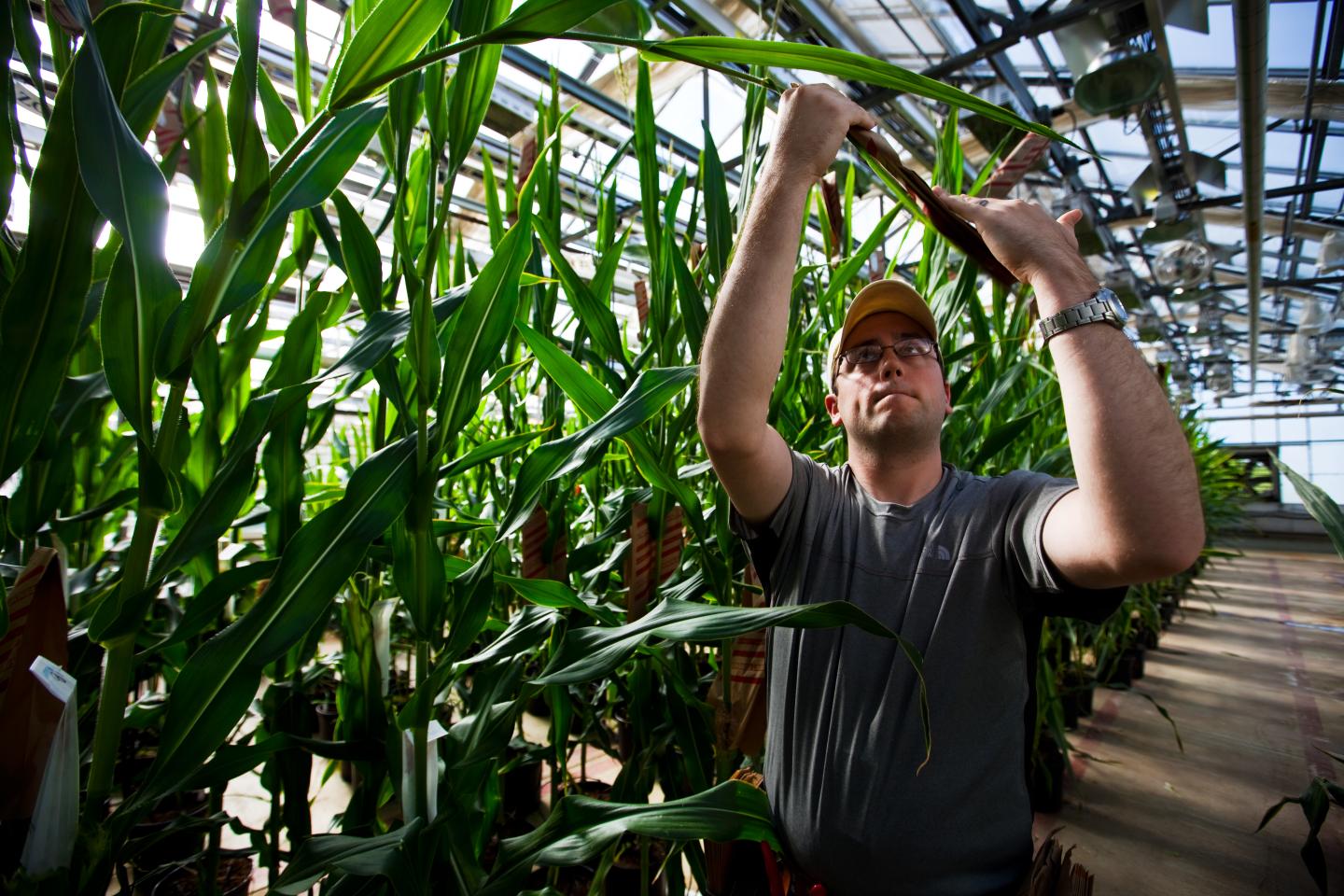
ST LOUIS, MISSOURI, MAY 2009: Plant Specialist Dustin McMahon hand pollinates genetically modified corn plants inside greenhouses housed on the roof of Monsanto agribusiness headquarters in St Louis, Missouri, 21 May 2009. McMahon is attempting to breed a resistant strain of corn which will one day form the basis of an elite corn crop of the future. Monsanto is at the forefront of biotechnology in the agribusiness sector. These greenhouses are designed and built inhouse and they allow the technicans to monitor plant growth daily. These plants are monitored for the perfect DNA of an elite corn seed and then those plants that make the grade are forwarded to the next stage of the selection process. Monsanto is a controversial global corporate with a history of strong litigation against those it assumes are interfering with its stringent patent laws. This practise as well as its advanced genetically modified technology approach in the agricultural sector have led many to be suspicious of Monsanto and the ultimate good of GM foods. Monsanto argues back that sufficent food production for the future is simply not possible without adequate GM technology in agriculture. (Photograph by Brent Stirton/Getty Images.)Photograph by Brent Stirton—Getty Images
Add Fortune on Google for similar content.

All those Facebook memes featuring Willy Wonka and The Most Interesting Man in the World warning that genetically modified crops will kill us all have done little to help the anti-GMO cause. Most recently, activists have been fighting to force food companies to affix warning labels to products that contain GMOs. Whether they win or lose won’t matter much, because Monsanto, the world’s largest seed company, is an unstoppable Leviathan, and GMOs are here to stay.

The beside-the-pointness of the labeling movement is made starkly plain by a glance at Monsanto’s financials. The company on Wednesday reported a drop in earnings of nearly 6% in the third quarter, but its stock soared by more than 5%. The company also announced it will buy back $10 billion worth of shares over the next two years, and, more to the point, declared that it expects to at least double its profits by 2019, thanks almost entirely to its seeds and genomics businesses.

None of this is particularly surprising, except perhaps to some of the meme-spreaders. And it’s all happening despite more-serious resistance to GMOs across big swaths of the globe.

Monsanto (MON) makes money almost no matter what. If its corn business sinks, as it has this year, it makes up for some of the losses by selling more soybean seeds (many farmers tend to switch between the crops depending on market conditions). If rivals gain market share, it often makes money from the technology licenses it sells to, for example, DuPont (DD), its chief competitor (and, as a licensee, one of its biggest customers). When its patents expire, it sells farmers on the newer seed varieties it is constantly pushing through its pipeline. The company is hedged to the hilt: seemingly, any loss is also a potential gain.

That’s especially true when it comes to anti-GMO sentiment and hard-to-crack international markets. Europe is blocking sales of seeds and traits? Open markets in a more-receptive South America, where growth prospects are much bigger anyway. China is closing off its markets out of feigned concern about GMOs? Pour more resources into India.

In the United States, the anti-GMO movement is almost laughably impotent, despite the headlines it manages to regularly snag. GMOs are overwhelmingly dominant here among the major crops, representing more than 90% of corn, soybeans, cotton, sugar beets, and canola. And Monsanto holds huge shares of those markets — about 80% of U.S. corn and more than 90% of U.S. soybeans are grown with seeds containing Monsanto’s patented seed traits (whether sold by Monsanto itself or by licensees). In all, the company holds about 1,700 patents. In 2013, Monsanto racked up sales of $14.9 billion. Of that, $10.3 billion came from seeds and genomic traits.

GMO crops took up about 1.7 million hectares soon after they were introduced in 1996. Acreage has grown at an average clip of 10 million hectares a year, according to the International Service for the Acquisition of Agri-Biotech Applications, and are now up to 175 million hectares, with no signs of abating. And Monsanto is either leading most of these markets, or is in close competition for them.

The upward trajectory isn’t just luck, and it isn’t just a friendly political climate in the United States (though that has surely helped). For such a big company, Monsanto is nimble, and able to turn on a dime when necessary. For instance, when profits sank during the last recession, the company quickly disinvested in its Roundup herbicide line, which was being quickly replicated by cheaper, generic versions, and shifted more focus to its core seed business, which represents about 70% of the company’s sales. Profits have bounced back in a big way, with net margins at about 30%.

Meanwhile, the company is looking far ahead with investments in farm-productivity products such as data analytics. It purchased Climate Corp. last October for $930 million for its to boost its analytics portfolio. Farmers representing about 40 million acres in the United States (about 20% of corn and soybean acreage) are now using the company’s analytic products, about double what the company had earlier forecast.

For several years, Wall Street had been skittish about Monsanto’s prospects, in part because of the loud opposition to GMOs. No longer. Just over the past few quarters, analysts have been ratcheting up their target prices. Wells Fargo did so after the company’s first quarter results were announced. J.P. Morgan followed in April after another successful quarter. On Wednesday, Citigroup’s P.J. Juvekar called Monsanto “our favorite name in ag,” and set a price target of $125 — which was quickly surpassed in the day’s trading. (On Thursday, shares sank slightly, but were still trading just above $125.)

Such sentiments are also found on the buy side. In May, Larry Robbins of the hedge fund Glenview Capital Management insisted during the Sohn Investment Conference that Monsanto’s shares — then trading at about $110 — were way undervalued. Though he complained about Monsanto “hoarding capital” with its $15.8 billion in “dry powder” (cash), he enthused about the company’s prospects. It enjoys “massive barriers to entry” and “perpetual local monopolies” thanks to farmers basically signing on with Monsanto for life. He noted that while “corn demand will double” over the next 15 or 20 years, “acres won’t,” necessitating far greater yields. “In the real world, we cannot solve world hunger on an organic basis,” Robbins said.

Clearly, not everybody agrees with that assessment, but Wall Street sure seems to. And so do farmers.

About the Author
By Dan Mitchell
See full bioRight Arrow Button Icon
Add Fortune on Google for similar content.

Latest in Features

Finance
Lorem ipsum dolor sit amet, consectetur adipiscing elit, sed do eiusmod tempor incididunt ut labore et dolore magna aliqua. Ut enim ad minim veniam
By Fortune Editors
October 20, 2025
Finance
Lorem ipsum dolor sit amet, consectetur adipiscing elit, sed do eiusmod tempor incididunt ut labore et dolore magna aliqua. Ut enim ad minim veniam
By Fortune Editors
October 20, 2025
Finance
Lorem ipsum dolor sit amet, consectetur adipiscing elit, sed do eiusmod tempor incididunt ut labore et dolore magna aliqua. Ut enim ad minim veniam
By Fortune Editors
October 20, 2025
Finance
Lorem ipsum dolor sit amet, consectetur adipiscing elit, sed do eiusmod tempor incididunt ut labore et dolore magna aliqua. Ut enim ad minim veniam
By Fortune Editors
October 20, 2025
Finance
Lorem ipsum dolor sit amet, consectetur adipiscing elit, sed do eiusmod tempor incididunt ut labore et dolore magna aliqua. Ut enim ad minim veniam
By Fortune Editors
October 20, 2025
Finance
Lorem ipsum dolor sit amet, consectetur adipiscing elit, sed do eiusmod tempor incididunt ut labore et dolore magna aliqua. Ut enim ad minim veniam
By Fortune Editors
October 20, 2025

Most Popular

Finance
Lorem ipsum dolor sit amet, consectetur adipiscing elit, sed do eiusmod tempor incididunt ut labore et dolore magna aliqua. Ut enim ad minim veniam
By Fortune Editors
October 20, 2025
Finance
Lorem ipsum dolor sit amet, consectetur adipiscing elit, sed do eiusmod tempor incididunt ut labore et dolore magna aliqua. Ut enim ad minim veniam
By Fortune Editors
October 20, 2025
Finance
Lorem ipsum dolor sit amet, consectetur adipiscing elit, sed do eiusmod tempor incididunt ut labore et dolore magna aliqua. Ut enim ad minim veniam
By Fortune Editors
October 20, 2025
Finance
Lorem ipsum dolor sit amet, consectetur adipiscing elit, sed do eiusmod tempor incididunt ut labore et dolore magna aliqua. Ut enim ad minim veniam
By Fortune Editors
October 20, 2025
Finance
Lorem ipsum dolor sit amet, consectetur adipiscing elit, sed do eiusmod tempor incididunt ut labore et dolore magna aliqua. Ut enim ad minim veniam
By Fortune Editors
October 20, 2025
Finance
Lorem ipsum dolor sit amet, consectetur adipiscing elit, sed do eiusmod tempor incididunt ut labore et dolore magna aliqua. Ut enim ad minim veniam
By Fortune Editors
October 20, 2025
Fortune Secondary Logo
Rankings
  • 100 Best Companies
  • Fortune 500
  • Global 500
  • Fortune 500 Europe
  • Most Powerful Women
  • World's Most Admired Companies
  • See All Rankings
  • Lists Calendar
Sections
  • Finance
  • Fortune Crypto
  • Features
  • Leadership
  • Health
  • Commentary
  • Success
  • Retail
  • Mpw
  • Tech
  • Lifestyle
  • CEO Initiative
  • Asia
  • Politics
  • Conferences
  • Europe
  • Newsletters
  • Personal Finance
  • Environment
  • Magazine
  • Education
Customer Support
  • Frequently Asked Questions
  • Customer Service Portal
  • Privacy Policy
  • Terms Of Use
  • Single Issues For Purchase
  • International Print
Commercial Services
  • Advertising
  • Fortune Brand Studio
  • Fortune Analytics
  • Fortune Conferences
  • Business Development
  • Group Subscriptions
About Us
  • About Us
  • Press Center
  • Work At Fortune
  • Terms And Conditions
  • Site Map
  • About Us
  • Press Center
  • Work At Fortune
  • Terms And Conditions
  • Site Map
  • Facebook icon
  • Twitter icon
  • LinkedIn icon
  • Instagram icon
  • TikTok icon
  • YouTube icon

Latest in Features

The American Dream according to Bill Ackman
MagazineBill Ackman
The American Dream according to Bill Ackman
By Jeff John RobertsJuly 20, 2026
1 day ago
Photo: Asha Sharma
Big TechMicrosoft
Exclusive: Xbox’s CEO on 3,200 layoffs, four studios cut, and her blunt warning that ‘we spread ourselves too thin’
By Sebastian HerreraJuly 6, 2026
15 days ago
David Senra poses in a black shirt in front of bookshelves
Startups & VentureMedia
How David Senra built the podcast the world’s most powerful CEOs can’t stop listening to
By Lily Mae LazarusJuly 5, 2026
17 days ago
Nike’s self-inflicted wounds are risking CEO Elliott Hill’s nascent comeback
RetailNike
Nike’s self-inflicted wounds are risking CEO Elliott Hill’s nascent comeback
By Phil WahbaJuly 4, 2026
18 days ago
Inside the mind of Kevin Warsh: As told by his former boss Condoleezza Rice, his college friend, and his closest partner during the financial crisis
MagazineKevin Warsh
Inside the mind of Kevin Warsh: As told by his former boss Condoleezza Rice, his college friend, and his closest partner during the financial crisis
By Eleanor PringleJuly 3, 2026
19 days ago
Anthropic CEO Dario Amodei pointing to his head.
AIAnthropic
At the heart of Anthropic’s clashes with the U.S. government, a decision not to play by the new rules of Trump’s Washington
By Jeremy KahnJune 30, 2026
21 days ago

Most Popular

Mark Cuban says he has the solution to growing income inequality, and it's to reward every employee—from CEO to janitor—with company stock
Success
Mark Cuban says he has the solution to growing income inequality, and it's to reward every employee—from CEO to janitor—with company stock
By Sasha RogelbergJuly 20, 2026
1 day ago
‘I want to die broke’: Billionaire philanthropist Denny Sanford dies after giving away $4 billion
Success
‘I want to die broke’: Billionaire philanthropist Denny Sanford dies after giving away $4 billion
By Sydney LakeJuly 20, 2026
1 day ago
'Dr. Doom' Nouriel Roubini says we're headed for universal basic income or 'some form of socialism' as AI revolutionizes work—He calls that optimistic
AI
'Dr. Doom' Nouriel Roubini says we're headed for universal basic income or 'some form of socialism' as AI revolutionizes work—He calls that optimistic
By Jason MaJuly 18, 2026
3 days ago
The Treasury is walking a tightrope on U.S. debt by relying so much on short-term rates that are at the mercy of a suddenly very hawkish Fed
Economy
The Treasury is walking a tightrope on U.S. debt by relying so much on short-term rates that are at the mercy of a suddenly very hawkish Fed
By Jason MaJuly 20, 2026
1 day ago
Current price of silver as of Monday, July 20, 2026
Personal Finance
Current price of silver as of Monday, July 20, 2026
By Joseph HostetlerJuly 20, 2026
2 days ago
Jamie Dimon won't put more of his own money into the long end of the bond market right now—thanks to the $39 trillion national debt
Economy
Jamie Dimon won't put more of his own money into the long end of the bond market right now—thanks to the $39 trillion national debt
By Eleanor PringleJuly 21, 2026
11 hours ago

© 2026 Fortune Media IP Limited. All Rights Reserved. Use of this site constitutes acceptance of our Terms of Use and Privacy Policy | CA Notice at Collection and Privacy Notice | Do Not Sell/Share My Personal Information
FORTUNE is a trademark of Fortune Media IP Limited, registered in the U.S. and other countries. FORTUNE may receive compensation for some links to products and services on this website. Offers may be subject to change without notice.