• Home
  • Latest
  • Fortune 500
  • Finance
  • Tech
  • Leadership
  • Lifestyle
  • Rankings
  • Multimedia
Music

Bob Pittman doesn’t believe streaming will kill radio. But he’s built a massive streaming service, just in case

By
Erin Griffith
Erin Griffith
Down Arrow Button Icon
By
Erin Griffith
Erin Griffith
Down Arrow Button Icon
June 17, 2014, 9:00 AM ET

Considering Internet radio has been around since 2000, you’d expect the market to have shaken out by now. But competition has actually become more fierce. Spotify has grown to 50 million users, with ten million of them paying to access the service each month. Pandora continues to grow with 250 million registered users; around 77 million are active. Apple made several big moves in the category, introducing iTunes Radio last year and buying Beats by Dre and its music streaming service for $3 billion last month. And last week, as expected, Amazon introduced its own competitor: Prime Music.

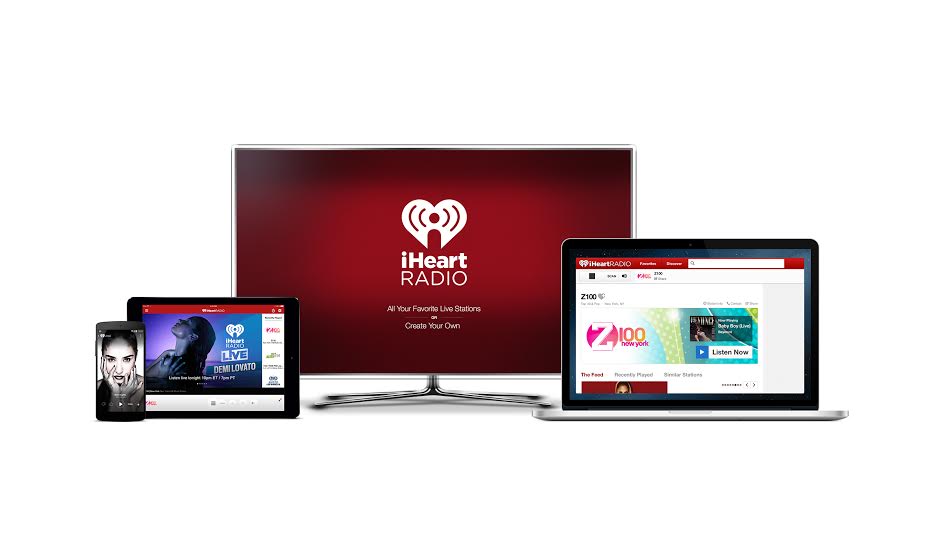
And then there’s iHeartRadio, the streaming music service owned by terrestrial giant Clear Channel. The company today announced it has crossed 50 million registered users.

That reach makes Clear Channel’s streaming offering a formidable competitor to Pandora (P), Spotify, Apple (AAPL), and Amazon (AMZN). But Clear Channel CEO Bob Pittman is not as concerned with Internet radio as one might think. Digital radio makes a lot of noise, but only accounts for 10% of the overall radio market. (A market that, conveniently, is dominated by Clear Channel.)

“If it were not for the fact that radio is so large, you’d say, ‘Wow these are big numbers,’” Pittman tells Fortune. “There are one billion FM radios in the US and 160 million smartphones and 160 million PCs, so it’s still a subset of the FM marketplace.”

Pittman doesn’t believe streaming hours will overtake traditional radio in his lifetime. “Music collections always replace each other and radio always tends to be yet another choice,” he says. “Satellite didn’t kill FM. AM didn’t kill FM. (Streaming music) one more choice and one more device you can listen to the radio on.”

With that perspective, why would Clear Channel waste resources getting 50 million people to use a streaming service like iHeartRadio to begin with? The product draws resources from a number of Clear Channel’s businesses, including live shows, tech, operations and advertising. As Pandora’s investors know too well, it is not cheap to license music streaming rights from the record labels.

The short answer, Pittman says, is growth. He maintains that digital is an important growth area for the business, even if the $17 billion or so that advertisers spend on radio each year is slow to move over to the Web.

Clear Channel and iHeartRadio have considered selling subscriptions or downloads to monetize, similar to their competitors, Pittman says, but for now the company plans to stay “above the fray” in its relationship with record labels. “They’re in the business of selling the music and we’re not,” he says.

In 2012, Clear Channel made strange bedfellows when it joined forces with Pandora to lobby Congress to lower the rates their services were required to pay artists to stream their music online. The companies eventually backed down from that effort in order to focus on a different political tact.

Since then, competition for digital media consumption has only increased. And while the audience is significantly smaller than that of traditional radio, it’s hard to ignore the shift in time spent from radio to streaming. Pittman admits that Web radio is a more fragmented marketplace than the near-monopoly his company enjoys in terrestrial radio. Online, people “tend to have a favorite and then they bounce around a couple different services,” Pittman says. Each service has different strengths, but for radio stations on digital, iHeartRadio is a go-to, he says. “If they’re going to radio, clearly they’re using us.”

Update: A previous version of this article said iHeartRadio has 50 million monthly active users. It has been corrected to say the service has 50 million registered users.


About the Author
By Erin Griffith
See full bioRight Arrow Button Icon

Latest in

Personal FinanceCertificates of Deposit (CDs)
Truist CD rates 2025: Probably not your best option (but here’s how to decide)
By Joseph HostetlerDecember 12, 2025
19 minutes ago
The Citibank logo on a green layered background.
Personal FinanceCertificates of Deposit (CDs)
Citibank CD rates 2025
By Joseph HostetlerDecember 12, 2025
19 minutes ago
The Bank of America logo on a green layered background.
Personal FinanceCertificates of Deposit (CDs)
Bank of America CD rates 2025: How to ensure you get the highest APY
By Joseph HostetlerDecember 12, 2025
20 minutes ago
The Citizens Bank logo on a green layered background.
Personal FinanceCertificates of Deposit (CDs)
Citizens Bank CD rates 2025: Strong APY (but can you afford it?)
By Joseph HostetlerDecember 12, 2025
21 minutes ago
Personal FinanceCertificates of Deposit (CDs)
Digital Federal Credit Union CD rates 2025: Wide selection of CDs with impressive return rates
By Joseph HostetlerDecember 12, 2025
22 minutes ago
The American Express logo on a layered green background
Personal FinanceCertificates of Deposit (CDs)
American Express CD rates 2025: No-frills options with strong return rates
By Joseph HostetlerDecember 12, 2025
23 minutes ago

Most Popular

placeholder alt text
Success
At 18, doctors gave him three hours to live. He played video games from his hospital bed—and now, he’s built a $10 million-a-year video game studio
By Preston ForeDecember 10, 2025
2 days ago
placeholder alt text
Success
Palantir cofounder calls elite college undergrads a ‘loser generation’ as data reveals rise in students seeking support for disabilities, like ADHD
By Preston ForeDecember 11, 2025
1 day ago
placeholder alt text
Investing
Baby boomers have now 'gobbled up' nearly one-third of America's wealth share, and they're leaving Gen Z and millennials behind
By Sasha RogelbergDecember 8, 2025
4 days ago
placeholder alt text
Economy
Tariffs are taxes and they were used to finance the federal government until the 1913 income tax. A top economist breaks it down
By Kent JonesDecember 12, 2025
8 hours ago
placeholder alt text
Economy
‘We have not seen this rosy picture’: ADP’s chief economist warns the real economy is pretty different from Wall Street’s bullish outlook
By Eleanor PringleDecember 11, 2025
1 day ago
placeholder alt text
Uncategorized
Transforming customer support through intelligent AI operations
By Lauren ChomiukNovember 26, 2025
16 days ago
Rankings
  • 100 Best Companies
  • Fortune 500
  • Global 500
  • Fortune 500 Europe
  • Most Powerful Women
  • Future 50
  • World’s Most Admired Companies
  • See All Rankings
Sections
  • Finance
  • Leadership
  • Success
  • Tech
  • Asia
  • Europe
  • Environment
  • Fortune Crypto
  • Health
  • Retail
  • Lifestyle
  • Politics
  • Newsletters
  • Magazine
  • Features
  • Commentary
  • Mpw
  • CEO Initiative
  • Conferences
  • Personal Finance
  • Education
Customer Support
  • Frequently Asked Questions
  • Customer Service Portal
  • Privacy Policy
  • Terms Of Use
  • Single Issues For Purchase
  • International Print
Commercial Services
  • Advertising
  • Fortune Brand Studio
  • Fortune Analytics
  • Fortune Conferences
  • Business Development
About Us
  • About Us
  • Editorial Calendar
  • Press Center
  • Work At Fortune
  • Diversity And Inclusion
  • Terms And Conditions
  • Site Map

© 2025 Fortune Media IP Limited. All Rights Reserved. Use of this site constitutes acceptance of our Terms of Use and Privacy Policy | CA Notice at Collection and Privacy Notice | Do Not Sell/Share My Personal Information
FORTUNE is a trademark of Fortune Media IP Limited, registered in the U.S. and other countries. FORTUNE may receive compensation for some links to products and services on this website. Offers may be subject to change without notice.