• Home
  • Latest
  • Fortune 500
  • Finance
  • Tech
  • Leadership
  • Lifestyle
  • Rankings
  • Multimedia

Trendingnow

1

Surging Treasury yields expose a brutal truth: America has no margin for error on its $39 trillion debt

2

U.S. says deals with Iran for safe Hormuz transit are prohibited

3

After a judge ordered Trump's name be removed from the Kennedy Center, president says it will 'soon be closed, probably never to open again'

1

Surging Treasury yields expose a brutal truth: America has no margin for error on its $39 trillion debt

2

U.S. says deals with Iran for safe Hormuz transit are prohibited

3

After a judge ordered Trump's name be removed from the Kennedy Center, president says it will 'soon be closed, probably never to open again'
Real EstateFinancial Crisis

Rescuing subprime borrowers won’t fix the economy

By
Edward Conard
Edward Conard
Down Arrow Button Icon
By
Edward Conard
Edward Conard
Down Arrow Button Icon
June 11, 2014, 12:16 PM ET
Getty Images/Collection Mix: Sub

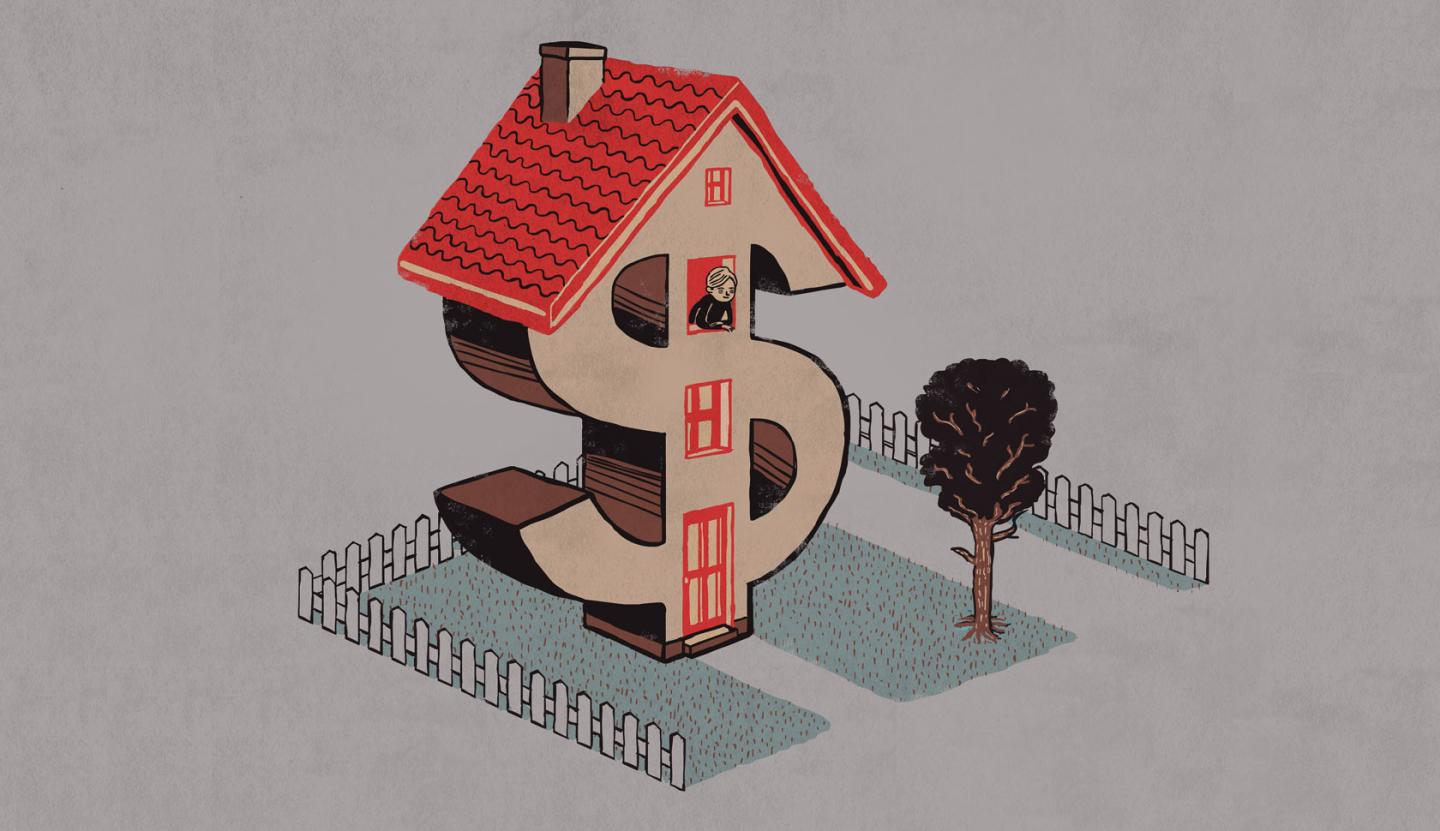
In their new book, House of Debt, Atif Mian and Amir Sufi make a persuasive argument that a decline in consumption caused by a drop in home prices slowed the economic recovery more than a weakened banking system. Even if banks were strong, they argue, the demand for loans would still be weak. Mian and Amir Sufi blame a sharp increase in savings by highly levered homeowners for the fall off in consumption and borrowing; as a result, the authors urge taxpayers to cover homeowner losses, including unrealized losses, to stimulate demand and help grow the economy.

Going forward, they also recommend that the government should require borrowers to purchase insurance to guard against declining home values. Even if Mian and Sufi are right that a falloff in subprime consumption is chiefly responsible for the slow recovery, they never convincingly show that highly levered homeowners saved sharply more when home prices fell. To make their case, the authors present evidence that low-income households borrowed against the rising value of their homes and spent the proceeds. They assume these same homeowners saved at a similar rate when home prices declined.

This assumption need not be true, and without further evidence, it does not seem likely. Low-income households tend to consume all of their income and save little for retirement. When home prices rose prior to the recession, low-income homeowners borrowed against their unrealized real estate gains and consumed much of that additional wealth. When home prices fell, these homeowners had no need to lower their consumption beyond the level required to pay back the loan. In fact, many defaulted on their agreement to repay, rented a comparable but now-cheaper home, and increased their consumption.

To bolster their claim, Mian and Sufi show that consumption—namely, automobile purchases—fell in zip codes with highly levered homeowners as housing prices declined.

Yet, the authors overlook a more likely explanation for this decline in spending. When households borrow and spend, their spending temporarily rises above their income. Once households consume the proceeds, spending must fall back to the households’ income. A given zip code can only continue to spend more than its income if additional households within the zip code start to borrow and spend. Overall, spending can only exceed income for as long as accumulated debt continues to rise relative to the zip code’s income, which cannot continue forever. If real estate prices fall and less levered households no longer have excess collateral against which to borrow, spending must fall sharply back to income, even if levered households continue to spend all of their income.

If highly levered homeowners did cut consumption following the housing market crash, they probably did so because of uncertain employment prospects. Under this alternative scenario, employment dropped because of a decline in borrowing by less levered households and not by an increase in saving by more levered households.

The difference is hardly inconsequential. In Mian and Sufi’s scenario, the zip code’s spending temporarily fell below its sustainable level. In this case, short-term fiscal stimulus, as prescribed by Mian and Sufi, might boost spending in order to prevent a temporary lull in demand from unnecessarily damaging the economy permanently. In the alternative scenario, the zip code’s spending fell back to its permanently sustainable level. In that case, damage caused by the need to reallocate production is ultimately unavoidable.

The authors overlook this alternative explanation. Their recommendation does little more than continue to heap money on the very households that consumed more than they earned. Worse, it assumes income redistribution has no cost, when even the International Monetary Fund has concluded that Europe’s higher level of transfer payments have slowed its long-term growth relative to the U.S.

To revive subprime lending and associated consumption, but mitigate the risk of recession, Mian and Sufi recommend that the government require mortgage holders to buy insurance that protect them against a decline in home prices. The authors believe insurers will agree to bear 80% of the loss for 5% of gain. But why would insurers do this when they can buy and rent out a comparable house to capture 100% of the gain for bearing 100% of the loss (i.e., a 1:1 loss-to-gain ratio vs. 16:1), since the lenders would require insurers to post collateral on par with a 20% down payment anyway? No surprise, this is precisely what investors did—they bought large portfolios of homes to rent.

At a deeper level, Mian and Sufi call for funding private investment with more equity and less debt. There are two problems with this recommendation: First, growth of the trade deficit from 1.5% of GDP in the late 1990s to 5% of GDP by the mid-2000s flooded the U.S. with risk-averse savings, not risk-bearing equity. If those savings sit idle, growth will slow, unemployment will rise, or wages will be lower. Without offering specifics, the authors call for the government alone to employ risk-averse savings, but how might the government do that other than to run even larger fiscal deficits or guarantee even more private-sector debt than they already do? Even after publically held federal debt doubled from about 35% of GDP prior to the crisis to over 70% today, and federal guarantees expanded from 45% to over 50% of financial firm debt, the supply of risk-averse savings still exceeds the supply of government-guaranteed debt.

Second, the capacity of equity to produce growth by underwriting risk is finite. Had we used more equity to absorb the risk of investing in real estate, there would have been that much less equity available to underwrite risk elsewhere. Slower growth in sectors with less equity would offset gains in sectors with more equity, especially if we reallocated equity to sectors where the growth is unsustainable.

The key to accelerating the recovery is not to generate unsustainable consumption, as Mian and Sufi propose. Rather, we must find sustainable uses for risk-averse savings—to fund productivity-enhancing infrastructure, for example, if that were possible in more than just theory.

Alternatively, we could accumulate more equity by lowering marginal taxes on successful innovators and use that equity to underwrite the risk of consuming or investing risk-averse savings. In practice, this would mean using the equity to fund larger down payment on homes or to capitalize banks with more equity, for instance, without merely reallocating equity from other sectors of the economy. We could also reduce the supply of risk-averse savings by discouraging these savings with negative interest rates or by restricting trade deficits, for example, if that were possible without offsetting repercussions. As a last resort, we could let risk-averse savings sit idle and consequently accept permanently lower growth, higher unemployment, or lower wages.

Without a full accounting of the costs, Mian and Sufi’s calls for more equity and less debt to mitigate recessions, low-cost insurance to cover housing losses, and fiscal stimulus to prop up what they hope is a temporary lull in demand, are little more than wishful thinking. Insight must show us how to choose between real alternatives that, unfortunately, have costly tradeoffs. House of Debt does not do this.

Edward Conard is the author of Unintended Consequences: Why Everything You’ve Been Told About The Economy Is Wrong. He’s also a visiting scholar at the American Enterprise Institute, and a former Managing Director at Bain Capital.

About the Author
By Edward Conard
See full bioRight Arrow Button Icon

Latest in Real Estate

Finance
Lorem ipsum dolor sit amet, consectetur adipiscing elit, sed do eiusmod tempor incididunt ut labore et dolore magna aliqua. Ut enim ad minim veniam
By Fortune Editors
October 20, 2025
Finance
Lorem ipsum dolor sit amet, consectetur adipiscing elit, sed do eiusmod tempor incididunt ut labore et dolore magna aliqua. Ut enim ad minim veniam
By Fortune Editors
October 20, 2025
Finance
Lorem ipsum dolor sit amet, consectetur adipiscing elit, sed do eiusmod tempor incididunt ut labore et dolore magna aliqua. Ut enim ad minim veniam
By Fortune Editors
October 20, 2025
Finance
Lorem ipsum dolor sit amet, consectetur adipiscing elit, sed do eiusmod tempor incididunt ut labore et dolore magna aliqua. Ut enim ad minim veniam
By Fortune Editors
October 20, 2025
Finance
Lorem ipsum dolor sit amet, consectetur adipiscing elit, sed do eiusmod tempor incididunt ut labore et dolore magna aliqua. Ut enim ad minim veniam
By Fortune Editors
October 20, 2025
Finance
Lorem ipsum dolor sit amet, consectetur adipiscing elit, sed do eiusmod tempor incididunt ut labore et dolore magna aliqua. Ut enim ad minim veniam
By Fortune Editors
October 20, 2025

Most Popular

Finance
Lorem ipsum dolor sit amet, consectetur adipiscing elit, sed do eiusmod tempor incididunt ut labore et dolore magna aliqua. Ut enim ad minim veniam
By Fortune Editors
October 20, 2025
Finance
Lorem ipsum dolor sit amet, consectetur adipiscing elit, sed do eiusmod tempor incididunt ut labore et dolore magna aliqua. Ut enim ad minim veniam
By Fortune Editors
October 20, 2025
Finance
Lorem ipsum dolor sit amet, consectetur adipiscing elit, sed do eiusmod tempor incididunt ut labore et dolore magna aliqua. Ut enim ad minim veniam
By Fortune Editors
October 20, 2025
Finance
Lorem ipsum dolor sit amet, consectetur adipiscing elit, sed do eiusmod tempor incididunt ut labore et dolore magna aliqua. Ut enim ad minim veniam
By Fortune Editors
October 20, 2025
Finance
Lorem ipsum dolor sit amet, consectetur adipiscing elit, sed do eiusmod tempor incididunt ut labore et dolore magna aliqua. Ut enim ad minim veniam
By Fortune Editors
October 20, 2025
Finance
Lorem ipsum dolor sit amet, consectetur adipiscing elit, sed do eiusmod tempor incididunt ut labore et dolore magna aliqua. Ut enim ad minim veniam
By Fortune Editors
October 20, 2025
Fortune Secondary Logo
Rankings
  • 100 Best Companies
  • Fortune 500
  • Global 500
  • Fortune 500 Europe
  • Most Powerful Women
  • World's Most Admired Companies
  • See All Rankings
  • Lists Calendar
Sections
  • Finance
  • Fortune Crypto
  • Features
  • Leadership
  • Health
  • Commentary
  • Success
  • Retail
  • Mpw
  • Tech
  • Lifestyle
  • CEO Initiative
  • Asia
  • Politics
  • Conferences
  • Europe
  • Newsletters
  • Personal Finance
  • Environment
  • Magazine
  • Education
Customer Support
  • Frequently Asked Questions
  • Customer Service Portal
  • Privacy Policy
  • Terms Of Use
  • Single Issues For Purchase
  • International Print
Commercial Services
  • Advertising
  • Fortune Brand Studio
  • Fortune Analytics
  • Fortune Conferences
  • Business Development
  • Group Subscriptions
About Us
  • About Us
  • Press Center
  • Work At Fortune
  • Terms And Conditions
  • Site Map
  • About Us
  • Press Center
  • Work At Fortune
  • Terms And Conditions
  • Site Map
  • Facebook icon
  • Twitter icon
  • LinkedIn icon
  • Instagram icon
  • Pinterest icon

Latest in Real Estate

Mid adult real estate agent talking to couple at a house for sale
Real Estatehomebuying
Pandemic relief funds accidentally broke the housing market by helping scammers inflate local home prices nearly 6%, study finds
By Tristan BoveMay 29, 2026
2 days ago
Current refi mortgage rates report for May 29, 2026
Personal FinanceReal Estate
Current refi mortgage rates report for May 29, 2026
By Glen Luke FlanaganMay 29, 2026
2 days ago
Current ARM mortgage rates report for May 29, 2026
Personal FinanceReal Estate
Current ARM mortgage rates report for May 29, 2026
By Glen Luke FlanaganMay 29, 2026
2 days ago
Mortgage rates today, May 29, 2026
Personal Financemortgages
Mortgage rates today, May 29, 2026
By Glen Luke FlanaganMay 29, 2026
2 days ago
ron
Personal FinanceFlorida
UBS says Ron DeSantis has a problem with his plan to help 92% of homeowners save on property taxes: His own state’s data
By Nick LichtenbergMay 28, 2026
3 days ago
Mortgage rates, May 28, 2026
Personal Financemortgages
Mortgage rates, May 28, 2026
By Glen Luke FlanaganMay 28, 2026
3 days ago

Most Popular

Surging Treasury yields expose a brutal truth: America has no margin for error on its $39 trillion debt
Economy
Surging Treasury yields expose a brutal truth: America has no margin for error on its $39 trillion debt
By Shawn TullyMay 30, 2026
1 day ago
U.S. says deals with Iran for safe Hormuz transit are prohibited
Politics
U.S. says deals with Iran for safe Hormuz transit are prohibited
By Jack Wittels and BloombergMay 30, 2026
1 day ago
After a judge ordered Trump's name be removed from the Kennedy Center, president says it will 'soon be closed, probably never to open again'
Law
After a judge ordered Trump's name be removed from the Kennedy Center, president says it will 'soon be closed, probably never to open again'
By Collin Binkley and The Associated PressMay 30, 2026
19 hours ago
After Blue Origin rocket explosion, NASA's entire moon exploration program depends on SpaceX for now as Musk eyes blockbuster IPO soon
Innovation
After Blue Origin rocket explosion, NASA's entire moon exploration program depends on SpaceX for now as Musk eyes blockbuster IPO soon
By Jason MaMay 30, 2026
21 hours ago
Damn the torpedoes — More ships are quietly slipping through the Strait of Hormuz as helicopters scare off Iran's fast-attack boats
Energy
Damn the torpedoes — More ships are quietly slipping through the Strait of Hormuz as helicopters scare off Iran's fast-attack boats
By Jason MaMay 30, 2026
23 hours ago
Gen Z is rejecting $200 dates and choosing 'solo-maxxing'—and dating apps are taking a hit
Economy
Gen Z is rejecting $200 dates and choosing 'solo-maxxing'—and dating apps are taking a hit
By Sydney LakeMay 30, 2026
1 day ago

© 2026 Fortune Media IP Limited. All Rights Reserved. Use of this site constitutes acceptance of our Terms of Use and Privacy Policy | CA Notice at Collection and Privacy Notice | Do Not Sell/Share My Personal Information
FORTUNE is a trademark of Fortune Media IP Limited, registered in the U.S. and other countries. FORTUNE may receive compensation for some links to products and services on this website. Offers may be subject to change without notice.