
• Home
  • Latest
  • Fortune 500
  • Finance
  • Tech
  • Leadership
  • Lifestyle
  • Rankings
  • Multimedia
Economy

‘Income inequality’—the most boring debate in America

Geoff Colvin
By
Geoff Colvin
Geoff Colvin
Senior Editor-at-Large
Down Arrow Button Icon
Geoff Colvin
By
Geoff Colvin
Geoff Colvin
Senior Editor-at-Large
Down Arrow Button Icon
June 3, 2014, 3:34 AM ET
164929320
Empty red seesaw on green backgroundPhotograph by Steven Puetzer Getty Images

I suspect I’m not the only one suffering from severe inequality fatigue.

The debate over income inequality is now officially the most boring debate in America, and that’s because it’s scarcely a “debate” at all. Here’s the thrilling state of play. Liberals think inequality is a really big problem—“the defining challenge of our time,” as President Obama said last December. Conservatives think it’s a problem, but not all that serious. As House Speaker John Boehner said grudgingly in March, “We do have an issue of income inequality in America.”

So we see furrowed brows across the political spectrum, with the “debate” focused on exactly how energetically we should be wringing our hands.

Wake me when it’s over.

Yet it needn’t be this way. We could have a truly interesting debate over income inequality if we started by confronting three questions that no one is asking:

1. If today’s degree of inequality is too great, then what degree would be just right?

Inequality can be measured variously, but the generic chart shows it peaking in the late 1920s, then declining to a trough in the early 1970s, then ascending to today’s level, which is not quite as high as the previous peak. Was 1973 therefore Nirvana, inequality-wise, with the top 1% getting 7.8% of total pre-tax income? That’s still very unequal.

Facing these questions forces debaters to acknowledge that some degree of income inequality is inevitable and even desirable, reflecting the incredible diversity of human aspirations, from wanting to be a poverty-vowing Franciscan friar to wanting to run a hedge fund. Most people actually don’t want to wage a “fight against income inequality,” as Mother Jones calls it. They just want to adjust the degree. If today’s bland inequality-is-bad theme gets replaced with a view that inequality is natural and at some level potentially good, the debate gets a lot more substantive.

2. If everyone’s real income were multiplied by 100, would inequality still be a problem?

Essentially everyone would be at least well-to-do; the middle class would live in opulence; the very rich would be even more staggeringly rich. If the answer is no, it would no longer be a problem, then we’re saying the real issue isn’t inequality at all; it’s that some people just don’t have enough. If the answer is yes, inequality would still be a problem, then we’re saying that no matter how rich people are, excessive inequality tears the social fabric. Pondering the question makes both left and right think harder.

3.Is education the real reason for what’s happening?

Among labor economists there’s actually broad agreement about today’s income inequality. The “canonical model” of the trend, as some call it, was best expounded by Harvard’s Claudia Goldin and Lawrence Katz in their award-winning book The Race Between Education and Technology. Americans’ average level of education soared during most of the 20th century, matching the rising technological demands of employment. As more people gained the needed skills, the workforce broadly prospered, and inequality declined. But then, around 1970, our average educational attainment plateaued while the workplace kept demanding better skills. Only those who acquired the new skills—no longer a growing proportion of the workforce—moved ahead. The rest were left behind.

This explanation, researched with monumental thoroughness, is the best I’ve ever seen and is widely accepted among economists. It pushes aside the explanations being advanced by politicians, who are mostly flogging the same policy prescriptions they’ve been pushing for eons. If the inequality debate is really about education, then the discussion suddenly gets much more focused and productive.

Let’s hope public figures cut the platitudes and start debating questions like these—and soon. America’s eyes are glazing over fast.

About the Author
Geoff Colvin
By Geoff ColvinSenior Editor-at-Large
LinkedIn iconTwitter icon

Geoff Colvin is a senior editor-at-large at Fortune, covering leadership, globalization, wealth creation, the infotech revolution, and related issues.

See full bioRight Arrow Button Icon

Latest in Features

FeaturesThe Boring Company
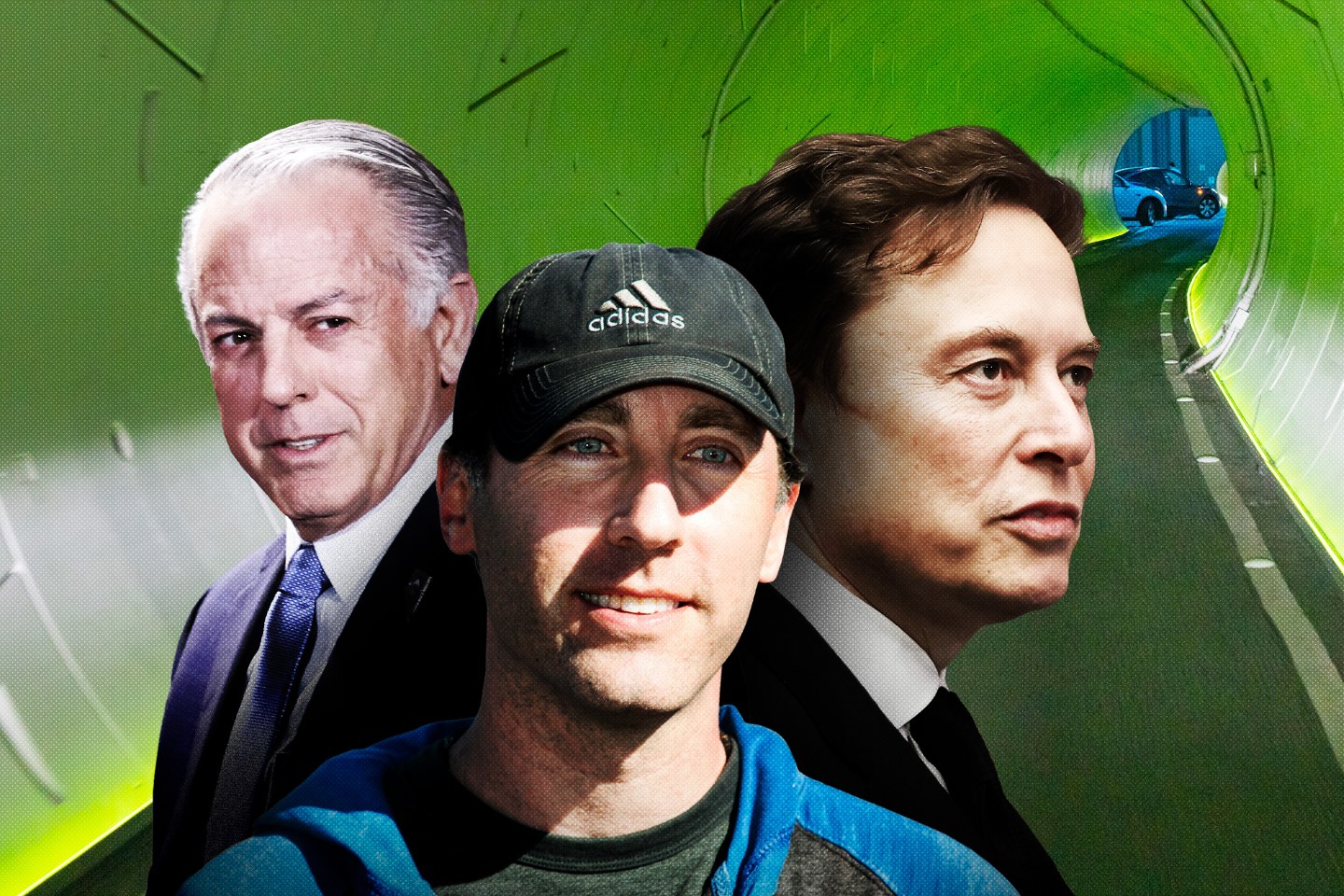
Two firefighters suffered chemical burns in a Boring Co. tunnel. Then the Nevada Governor’s office got involved, and the penalties disappeared
By Jessica Mathews and Leo SchwartzNovember 12, 2025
1 month ago
CoreWeave executives pose in front of the Nasdaq building on the day of the company's IPO.
AIData centers
Data-center operator CoreWeave is a stock-market darling. Bears see its finances as emblematic of an AI infrastructure bubble
By Jeremy Kahn and Leo SchwartzNovember 8, 2025
1 month ago
Libery Energy's hydraulic fracturing, or frac, spreads are increasingly electrified with natural gas power, a technology now translating to powering data centers.
Energy
AI’s insatiable need for power is driving an unexpected boom in oil-fracking company stocks 
By Jordan BlumOctober 23, 2025
2 months ago
Politics
Huge AI data centers are turning local elections into fights over the future of energy
By Sharon GoldmanOctober 22, 2025
2 months ago
A plane carrying Donald Trump Jr. arrives in January in Nuuk, Greenland, where he is making a short private visit after his father, President Trump, suggested Washington annex the autonomous Danish territory.
EnergyGreenland
A Texas company plans to drill for oil in Greenland despite a climate change ban and Trump’s desire to annex the territory
By Jordan BlumOctober 22, 2025
2 months ago
Three of the founders of Multiverse Computing.
AIChange the World
From WhatsApp friends to a $500 million–plus valuation: These founders argue their tiny AI models are better for customers and the planet
By Vivienne WaltOctober 9, 2025
2 months ago

Most Popular

placeholder alt text
Economy
Tariffs are taxes and they were used to finance the federal government until the 1913 income tax. A top economist breaks it down
By Kent JonesDecember 12, 2025
2 days ago
placeholder alt text
Success
Apple cofounder Ronald Wayne sold his 10% stake for $800 in 1976—today it’d be worth up to $400 billion
By Preston ForeDecember 12, 2025
1 day ago
placeholder alt text
Success
40% of Stanford undergrads receive disability accommodations—but it’s become a college-wide phenomenon as Gen Z try to succeed in the current climate
By Preston ForeDecember 12, 2025
1 day ago
placeholder alt text
Economy
The Fed just ‘Trump-proofed’ itself with a unanimous move to preempt a potential leadership shake-up
By Jason MaDecember 12, 2025
1 day ago
placeholder alt text
Economy
For the first time since Trump’s tariff rollout, import tax revenue has fallen, threatening his lofty plans to slash the $38 trillion national debt
By Sasha RogelbergDecember 12, 2025
1 day ago
placeholder alt text
Success
Apple CEO Tim Cook out-earns the average American’s salary in just 7 hours—to put that into context, he could buy a new $439,000 home in just 2 days
By Emma BurleighDecember 12, 2025
1 day ago
Rankings
  • 100 Best Companies
  • Fortune 500
  • Global 500
  • Fortune 500 Europe
  • Most Powerful Women
  • Future 50
  • World’s Most Admired Companies
  • See All Rankings
Sections
  • Finance
  • Leadership
  • Success
  • Tech
  • Asia
  • Europe
  • Environment
  • Fortune Crypto
  • Health
  • Retail
  • Lifestyle
  • Politics
  • Newsletters
  • Magazine
  • Features
  • Commentary
  • Mpw
  • CEO Initiative
  • Conferences
  • Personal Finance
  • Education
Customer Support
  • Frequently Asked Questions
  • Customer Service Portal
  • Privacy Policy
  • Terms Of Use
  • Single Issues For Purchase
  • International Print
Commercial Services
  • Advertising
  • Fortune Brand Studio
  • Fortune Analytics
  • Fortune Conferences
  • Business Development
About Us
  • About Us
  • Editorial Calendar
  • Press Center
  • Work At Fortune
  • Diversity And Inclusion
  • Terms And Conditions
  • Site Map

© 2025 Fortune Media IP Limited. All Rights Reserved. Use of this site constitutes acceptance of our Terms of Use and Privacy Policy | CA Notice at Collection and Privacy Notice | Do Not Sell/Share My Personal Information
FORTUNE is a trademark of Fortune Media IP Limited, registered in the U.S. and other countries. FORTUNE may receive compensation for some links to products and services on this website. Offers may be subject to change without notice.