• Home
  • Latest
  • Fortune 500
  • Finance
  • Tech
  • Leadership
  • Lifestyle
  • Rankings
  • Multimedia
FinanceTerm Sheet

Europe’s economy: Still in the danger zone

Shawn Tully
By
Shawn Tully
Shawn Tully
Senior Editor-at-Large
Down Arrow Button Icon
Shawn Tully
By
Shawn Tully
Shawn Tully
Senior Editor-at-Large
Down Arrow Button Icon
May 20, 2014, 11:45 AM ET
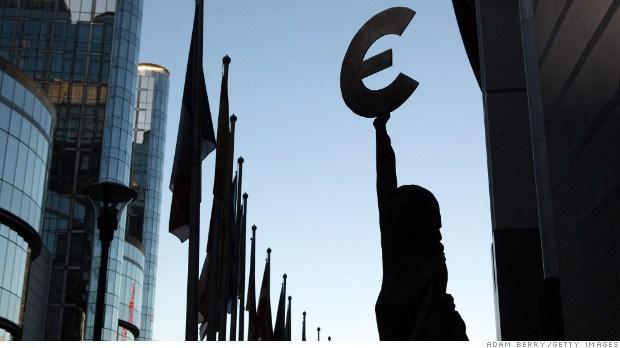
Adam Berry/Getty

FORTUNE — For the past year, we’ve been hearing that global growth, and the world’s equity markets, will get a major lift from a gradual recovery in Europe.

Indeed, Ireland and Portugal recently returned to the debt markets with well-received offerings, and the Greek government claims it will soon be in a position to issue bonds. Yields on sovereign debt remain remarkably low and stable. It’s indisputable that a mood of tranquility has returned to the eurozone.

But tranquility is not the same thing as progress, as the GDP figures released on May 15 by the Statistical Office of The European Union (Eurostat) alarmingly demonstrate. The 18-nation eurozone expanded by just 0.2% in the first quarter of 2014, half the figure economists were projecting.

Germany, as usual, was the leader, posting a gain of 0.8%. The problem spots are precisely the places where the comeback is supposedly underway: the beleaguered nations of Europe’s southern tier, as well as that tamed tiger, Ireland.

MORE: In Michigan, a minimum wage hike that ‘undercuts democracy’

The latest figures confirm that most of these countries aren’t improving at all. Italy’s economy shrank by 0.1% in the first three months of 2014, matching the average of the three previous quarters. After expanding 0.6% in Q2 2013, France recorded zero growth. Portugal shrank 0.7%, following positive numbers in the preceding nine months. While figures weren’t available for Greece and Ireland in Q1, neither country is showing progress. Greek GDP dropped 2.5% in the final three months of last year, and Ireland limped ahead at 0.2%.

The lone nation demonstrating a sustained upward trend, however modest, is Spain. It grew at 0.4% in the first quarter of 2014 after pretty much flatlining for the last nine months of 2013.

Harald Uhlig, a German-born and educated economist at the University of Chicago, provides a balanced view of the current risks to the eurozone. For Uhlig, it’s crucial to understand the divergent courses taken by Germany and the southern nations since the euro’s introduction in 1999, and how those policies have led to the disparate economic outcomes in these nations today. “Inflation had always been a big problem in southern Europe,” he says. “Rates were high, and they also carried a big ‘risk premium’ because you couldn’t be sure that the separate central banks wouldn’t do something crazy, causing more inflation.”

The institution of a single currency in Europe led to the creation of a Bundesbank-like European Central Bank that then and now sets monetary policy in a rigorous, predictable fashion. “Rates dropped, and government and consumer spending exploded, driving high growth rates,” says Uhlig. What’s often overlooked, he notes, is that Germany didn’t join the party. “Germany was the ‘sick man’ of Europe. It suffered when the euro was introduced, in contrast to the southern countries.” Germany posted miserable GDP numbers in the early 2000s, while Ireland, Greece, and Spain all roared ahead.

Then, Germany made a turn that, in retrospect, seems astounding. Chancellor Gerhard Schröder (who served from 1998 to 2005) championed reforms designed to create a far more flexible labor market. “His model was the U.S.,” says Uhlig. “Before that, I kept hearing from leaders in Germany who didn’t want to reform, [saying] what you hear now in southern Europe: ‘If we only have more growth in the next five years, we’ll get rid of the unemployment problem.’ But growth never came.”

MORE: Larry Summers: Stormy weather ahead for the Fed

Schröder decisively lowered pension costs and unemployment compensation, and he gave companies more flexibility with hiring and layoffs. Schröder paid a heavy price for securing the most dramatic labor market reforms in modern European history. “He should have been rewarded, but he was brutally punished,” says Uhlig.

Schröder lost the chancellorship to Angela Merkel in 2005. The fruits of his reforms didn’t surface until around 2006, when the German economy emerged as the strongest player in Europe, as demonstrated by its resurgence from the financial crisis.

Big spending inflated wages in southern Europe, and productivity gains couldn’t keep up, meaning labor costs in Spain and France for each unit of autos or steel produced grew at a faster rate than in Germany or the U.S. The crash exposed the competitiveness gap in southern Europe and Ireland. Global customers bought less and less of pricey exports from southern Europe.

So, what can these nations do now? “It can be solved in one of two ways,” says Uhlig. “One is exiting the euro so that costs decline in the new currency compared to costs in other nations. The other is a combination of productivity gains and labor cost reductions. That would be the far better course.”

The issue, he says, is that the troubled nations have done little to unshackle labor markets along the lines of Schröder’s reforms of a decade ago.

Uhlig is especially concerned about the deterioration in France. “Europe used to have two great stabilizers, France and Germany. Now it has one. In France, the retirement age is too low, and companies are often run by former government figures and are too politically connected, so that it’s difficult for entrepreneurs to challenge entrenched companies.” He worries that the future of the eurozone is increasingly “on the shoulders of just one stabilizer, Germany.”

The severe recession and high jobless rates have not done nearly enough to lower labor costs. “I keep hearing from colleagues that labor costs have come way down in Spain,” he says. “But they’re still too high. The southern countries haven’t solved the problem of letting wage costs run far ahead of gains in productivity.”

Uhlig also notes that Europe’s period of economic calm hasn’t been put to good use. “It hasn’t been used for the types of reforms that are needed,” says Uhlig. “The attitude is, the euro-crisis is over, yields are still fairly low, and we don’t have to do anything.”

MORE: How Blackstone can save The Cosmopolitan

Uhlig is particularly concerned with potential triggers that might undermine confidence in the credit markets. “If Greece defaults, it could set off a contagion that would raise rates for the other nations, causing more defaults and a possible exit from the euro.” Uhlig would much prefer that the euro stay in place, and the problem be addressed by the Schröder method. Unfortunately, he says, the Schröder experience haunts Europe’s current leaders. “They fear they’ll end up like Schröder and the Social Democrats,” he says.

Southern Europe may have missed its chance. The best time to reform was when times were flush in the mid-2000s. It’s far more difficult to undo regulations and restrictions imposed over decades when economies are stalled and budgets are stretched to the limit, making a fiscal spending jolt highly risky.

Europe’s leaders keep careening from one “solution” to another, fixating on the German elections, then on asset quality reviews for banks, then on huge monetary stimulus programs to prevent potential deflation. They’re missing what really needs to be done. If Europe doesn’t make some tough decisions, the market will make choices for them. That would deliver a giant, cracking sound heard round the world.

About the Author
Shawn Tully
By Shawn TullySenior Editor-at-Large

Shawn Tully is a senior editor-at-large at Fortune, covering the biggest trends in business, aviation, politics, and leadership.

See full bioRight Arrow Button Icon

Latest in Finance

Finance
Lorem ipsum dolor sit amet, consectetur adipiscing elit, sed do eiusmod tempor incididunt ut labore et dolore magna aliqua. Ut enim ad minim veniam
By Fortune Editors
October 20, 2025
Finance
Lorem ipsum dolor sit amet, consectetur adipiscing elit, sed do eiusmod tempor incididunt ut labore et dolore magna aliqua. Ut enim ad minim veniam
By Fortune Editors
October 20, 2025
Finance
Lorem ipsum dolor sit amet, consectetur adipiscing elit, sed do eiusmod tempor incididunt ut labore et dolore magna aliqua. Ut enim ad minim veniam
By Fortune Editors
October 20, 2025
Finance
Lorem ipsum dolor sit amet, consectetur adipiscing elit, sed do eiusmod tempor incididunt ut labore et dolore magna aliqua. Ut enim ad minim veniam
By Fortune Editors
October 20, 2025
Finance
Lorem ipsum dolor sit amet, consectetur adipiscing elit, sed do eiusmod tempor incididunt ut labore et dolore magna aliqua. Ut enim ad minim veniam
By Fortune Editors
October 20, 2025
Finance
Lorem ipsum dolor sit amet, consectetur adipiscing elit, sed do eiusmod tempor incididunt ut labore et dolore magna aliqua. Ut enim ad minim veniam
By Fortune Editors
October 20, 2025

Most Popular

Finance
Lorem ipsum dolor sit amet, consectetur adipiscing elit, sed do eiusmod tempor incididunt ut labore et dolore magna aliqua. Ut enim ad minim veniam
By Fortune Editors
October 20, 2025
Finance
Lorem ipsum dolor sit amet, consectetur adipiscing elit, sed do eiusmod tempor incididunt ut labore et dolore magna aliqua. Ut enim ad minim veniam
By Fortune Editors
October 20, 2025
Finance
Lorem ipsum dolor sit amet, consectetur adipiscing elit, sed do eiusmod tempor incididunt ut labore et dolore magna aliqua. Ut enim ad minim veniam
By Fortune Editors
October 20, 2025
Finance
Lorem ipsum dolor sit amet, consectetur adipiscing elit, sed do eiusmod tempor incididunt ut labore et dolore magna aliqua. Ut enim ad minim veniam
By Fortune Editors
October 20, 2025
Finance
Lorem ipsum dolor sit amet, consectetur adipiscing elit, sed do eiusmod tempor incididunt ut labore et dolore magna aliqua. Ut enim ad minim veniam
By Fortune Editors
October 20, 2025
Finance
Lorem ipsum dolor sit amet, consectetur adipiscing elit, sed do eiusmod tempor incididunt ut labore et dolore magna aliqua. Ut enim ad minim veniam
By Fortune Editors
October 20, 2025
Fortune Secondary Logo
Rankings
  • 100 Best Companies
  • Fortune 500
  • Global 500
  • Fortune 500 Europe
  • Most Powerful Women
  • Future 50
  • World’s Most Admired Companies
  • See All Rankings
Sections
  • Finance
  • Fortune Crypto
  • Features
  • Leadership
  • Health
  • Commentary
  • Success
  • Retail
  • Mpw
  • Tech
  • Lifestyle
  • CEO Initiative
  • Asia
  • Politics
  • Conferences
  • Europe
  • Newsletters
  • Personal Finance
  • Environment
  • Magazine
  • Education
Customer Support
  • Frequently Asked Questions
  • Customer Service Portal
  • Privacy Policy
  • Terms Of Use
  • Single Issues For Purchase
  • International Print
Commercial Services
  • Advertising
  • Fortune Brand Studio
  • Fortune Analytics
  • Fortune Conferences
  • Business Development
  • Group Subscriptions
About Us
  • About Us
  • Editorial Calendar
  • Press Center
  • Work At Fortune
  • Diversity And Inclusion
  • Terms And Conditions
  • Site Map
  • About Us
  • Editorial Calendar
  • Press Center
  • Work At Fortune
  • Diversity And Inclusion
  • Terms And Conditions
  • Site Map
  • Facebook icon
  • Twitter icon
  • LinkedIn icon
  • Instagram icon
  • Pinterest icon

Latest in Finance

broker
EnergyMarkets
Oil is back to early war days, S&P 500 jumps to all-time high
By Stan Choe and The Associated PressApril 17, 2026
8 hours ago
Photo of Donald Trump (left) and Pete Hegseth (right)
Economynational debt
Something is different about Trump’s $1 trillion war on Iran and its stress on the national debt, Harvard Kennedy scholar says
By Sasha RogelbergApril 17, 2026
9 hours ago
Half of Iran’s workforce faces unemployment risk as the U.S.-Israel war’s ‘hidden target’ was the labor market, economist says
EconomyIran
Half of Iran’s workforce faces unemployment risk as the U.S.-Israel war’s ‘hidden target’ was the labor market, economist says
By Jason MaApril 17, 2026
9 hours ago
The $39 trillion national debt could break the all-important U.S. bond market, sparking a ‘vicious’ emergency, former Treasury secretary warns 
EconomyDebt
The $39 trillion national debt could break the all-important U.S. bond market, sparking a ‘vicious’ emergency, former Treasury secretary warns 
By Tristan BoveApril 17, 2026
10 hours ago
Tether CEO Paolo Ardoino
CryptoCryptocurrency
Tether extends $127.5 million in funding to crypto platform Drift as critics blast rival Circle for failing to freeze hacked funds
By Jack KubinecApril 17, 2026
10 hours ago
Karen Carter
C-SuiteFortune 500 Power Moves
Fortune 500 Power Moves: Which executives gained and lost power this week
By Fortune EditorsApril 17, 2026
10 hours ago

Most Popular

Pope Leo warned the world is in ‘big trouble’ if Elon Musk becomes the first trillionaire
Success
Pope Leo warned the world is in ‘big trouble’ if Elon Musk becomes the first trillionaire
By Preston ForeApril 17, 2026
19 hours ago
A world going broke: IMF says America's $39 trillion national debt is actually a global problem—and AI may be the only rescue
Economy
A world going broke: IMF says America's $39 trillion national debt is actually a global problem—and AI may be the only rescue
By Nick LichtenbergApril 16, 2026
1 day ago
Jeff Bezos pledged $10 billion for climate change. With the 2030 clock ticking, his wife, Lauren Sánchez Bezos, is leading the charge to spend it
Environment
Jeff Bezos pledged $10 billion for climate change. With the 2030 clock ticking, his wife, Lauren Sánchez Bezos, is leading the charge to spend it
By Sydney LakeApril 15, 2026
3 days ago
Germany already told its workers to ditch four-day weeks and work-life balance. Now the government wants to cut their pay for calling in sick, too
Success
Germany already told its workers to ditch four-day weeks and work-life balance. Now the government wants to cut their pay for calling in sick, too
By Orianna Rosa RoyleApril 16, 2026
2 days ago
Iran has reopened the Strait of Hormuz—but experts say it now holds a card that works ‘almost like a nuclear deterrent’
Energy
Iran has reopened the Strait of Hormuz—but experts say it now holds a card that works ‘almost like a nuclear deterrent’
By Eva RoytburgApril 17, 2026
12 hours ago
MacKenzie Scott is bypassing the Ivy League and rewriting the $79 billion higher ed playbook by giving to HBCUs and community colleges
Politics
MacKenzie Scott is bypassing the Ivy League and rewriting the $79 billion higher ed playbook by giving to HBCUs and community colleges
By Sydney LakeApril 16, 2026
2 days ago

© 2026 Fortune Media IP Limited. All Rights Reserved. Use of this site constitutes acceptance of our Terms of Use and Privacy Policy | CA Notice at Collection and Privacy Notice | Do Not Sell/Share My Personal Information
FORTUNE is a trademark of Fortune Media IP Limited, registered in the U.S. and other countries. FORTUNE may receive compensation for some links to products and services on this website. Offers may be subject to change without notice.