FORTUNE — HSBC and Standard Chartered may have gotten out of the money laundering and sanction-skirting game just in time. Bitcoin, a virtual online “currency,” seems to be gaining traction and legitimacy among those who need to transfer or launder their cash outside of the prying eyes of regulators.
Spend some time in the sketchy online marketplace for this currency and you’ll find that Bitcoin users range from the common Iranian on the street, who is worried about inflation, to hit men and drug dealers, who prefer to be paid in an untraceable currency. If Bitcoin is able to stabilize its value on the international markets, it could eventually creep into the legitimate world of finance, threatening major profit centers for both the banks and payment operators like Visa and MasterCard.
The massive fines levied against British-based banks HSBC ($1.9 billion) and Standard Chartered ($327 million) last week were so big it was almost hard to comprehend. The two banks were accused of helping unscrupulous actors transfer and conduct business in violation of international law and UN sanctions. HSBC did a lot of work for the Mexican mafia while Standard Chartered enjoyed the comforts of Tehran by facilitating, as per the New York Attorney General’s Office, some $250 billion worth of oil trades for the Iranian government.
But HSBC (HBC) and Standard Chartered are hardly alone in grabbing a piece of the financial underworld. Nearly every major financial institution from Credit Suisse (CS) to UBS (UBS) to JPMorgan (JPM) have been fined at some point for facilitating questionable transactions for governments or individuals they knew they shouldn’t be dealing with. It is understandable why the banks participated in such business – it is extremely profitable.
MORE: Cerberus: We want out of gun biz
Nevertheless, it has become much harder for banks to conduct business with rogue nations and unsavory characters as governments, most notably the US, fight back. In its dealing with Iran, for example, the Obama administration has pressured the EU to lock Iran out of its banking system. Iran’s banks were recently cut off from the international “SWIFT” club, making it virtually impossible to transfer money to Iran from a foreign bank. This profit center, at least for now, seems closed to the banks.
But criminals and rogue nations still need to move their cash. Enter Bitcoin, the online virtual currency. For those unfamiliar, Bitcoin functions as a storage of wealth and a medium of exchange for goods and services mostly available for purchase on the web. For now, Bitcoins are primarily accepted in the Internet underworld known as the “Deep Web,” which is a sort of dark foil to the web brought to us by search engines and standard internet browsers.
Here in this internet netherworld you can buy and sell almost anything – from drugs to guns – all from the comfort of your home computer. Money laundering can be conducted through one of the various bitcoin “mixers,” like Bit Laundry, where bitcoins and cash are exchanged for “clean” ones. Like the banks, these mixers usually take a 1% transaction fee for the service.
Sending a Bitcoin payment is as easy as sending an email, you just need to access a Bitcoin “client,” like BitcoinID, and send the payment to another person’s Bitcoin “wallet.” There are a bunch of legitimate, and not so legitimate, PayPal-like Bitcoin services and BitCoin “exchanges” that streamline the process. Unlike sending money through traditional channels, Bitcoin transactions can be done completely anonymously, perfect for someone trying to skirt the law. Once a transaction is complete, it is easy to liquidate an account and open a new one at any time, allowing users to stay as incognito as possible.
MORE: What about food inflation, Bernanke?
Passing money and making transactions outside of normal pay channels has serious repercussions for the financial industry. The Bitcoin network is free and can be used by anyone at any time to send and receive payments. That compares to other payment networks run by MasterCard (MA), Visa (V), American Express (AXP) and Discover, all of which charge merchants fees for using their network and leave paper trails. The big banks charge large fees to move large blocks of cash. As with credit card payments, bank transactions leave paper trails, which are closely monitored by government regulators, who are constantly on the lookout for any sort of monetary malfeasance, ranging from tax dodging to money laundering.
But just because the Bitcoin network is free to use doesn’t mean it’s the best way to move wealth. Indeed, it is by far the riskiest way to send money as it is only as good as its medium of exchange — Bitcoins. Unlike currency backed by the full faith and credit of sovereign nations, Bitcoins are backed up by, well, nothing, leaving it open to wild swings on the international currency market. Since Bitcoins are still a virtual currency, buyers and sellers take on massive exchange rate risk moving money to and from their Bitcoin accounts. In the two years it’s been around, the Bitcoin has been valued as high as $30 to as low as $2. A wild swing occurred last summer when security concerns cause people to dump their Bitcoin en masse. Casual observers wrote off Bitcoin and moved on, but it has slowly and steadily regained its value, last trading at around $14 per Bitcoin.
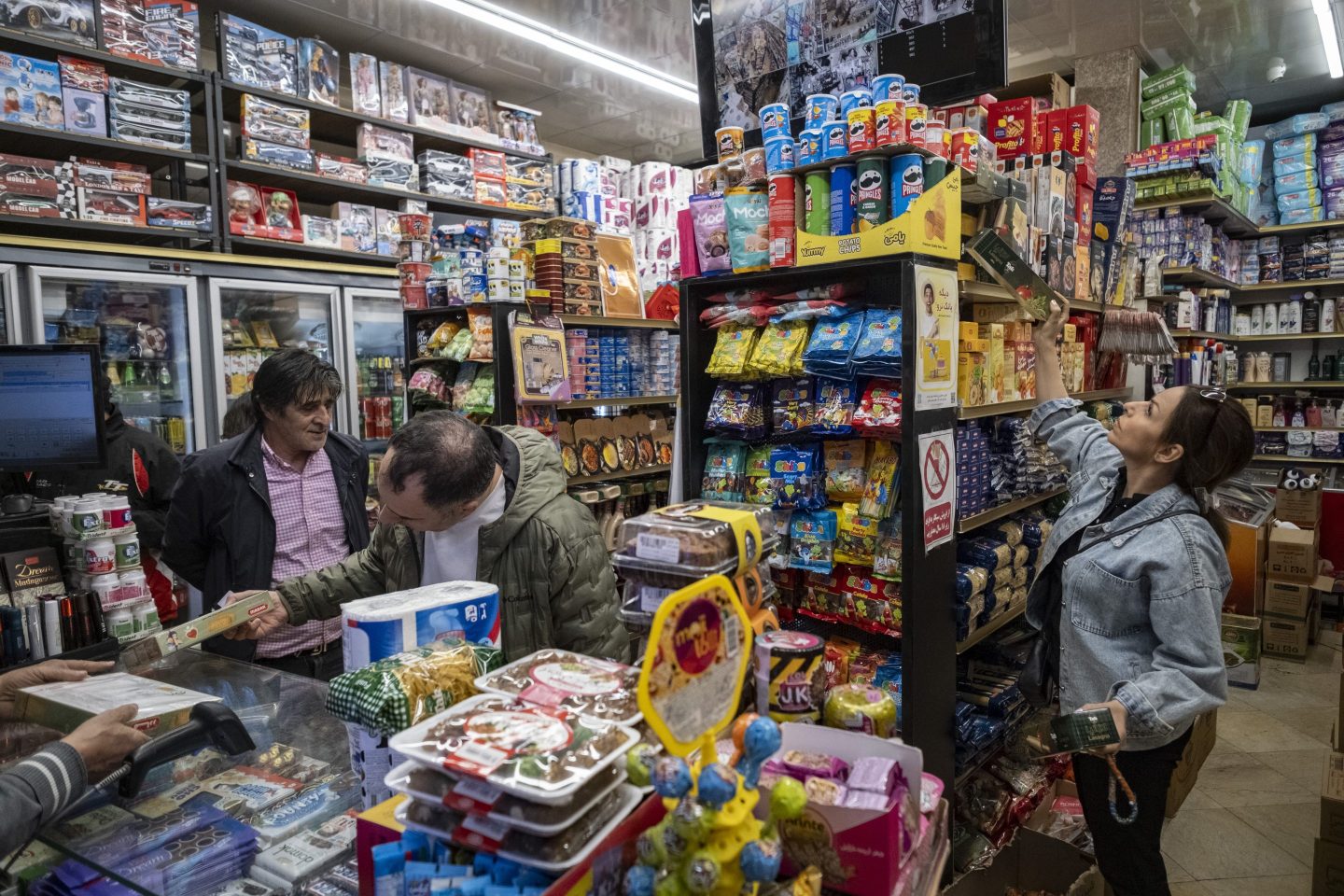
It is critical for Bitcoin to establish a relatively stable exchange rate if it is to survive as a currency and as a payment network. But for those living in nations with weak currencies, the Bitcoin has started to gain traction. In Iran, for instance, hyperinflation has caused some of the more technologically savvy Iranians to turn to Bitcoin to store their fleeting wealth. Before, Iranians used the US dollar, but those have become hard to find on the streets of Iran these days thanks to the tough international banking sanctions levied by the US and its allies.
MORE: How risky is the Fed’s major move?
It is here where Bitcoin may make a turn – rising from the deep web into a legitimate alternative currency; one where someone in the US can transfer cash to his cousin in Shiraz in a blink of an eye, with no trace and no fees. As the Bitcoin market becomes more liquid and more valuable (there are currently just 10.5 million Bitcoins in circulation valued at $140 million), it could even eventually be used by the government of Iran to buy and sell weapons and oil.
Indeed, authorities in the US and Europe are already concerned that Bitcoins could soon grow in value and become a major problem. The FBI recommended in a report this spring that third-party exchanges of Bitcoins be forced to adhere to the same anti-money laundering that the banks (are supposed) to be following.
“The US government doesn’t have much leverage over the exchanges,” Nicholas Christian, a professor at Carnegie Mellon University and an expert on cryptography and security, told Fortune. “It is not clear, yet, what status these exchanges have. Are they selling monetary products, are the selling financial products, or something else that doesn’t exist?”
What we do know is that Bitcoins operate in some sort of legal grey area, which is for now allowing Bitcoin transactions to occur totally unregulated and outside the scope of both US and international banking laws. While this may be great for people who want to live in the shadows it is deterring everyday people and legitimate merchants in the US and Europe from embracing it. Indeed, part of the crash in BitCoin value last summer was due in part to a major heist at one of the major online exchanges by cyber bandits. Without that legitimacy and security, Bitcoins will probably remain a shadow currency, which will be vulnerable to wild swings in valuation.
MORE: Post-financial crisis milestone: Banks beat market
But that may start to change, at least in Europe. Bit-Coin Central, one of the many online Bitcoin exchanges, announced earlier this month that it was teaming up with Aqoba, a local payment service provider in France, to keep funds on behalf of third-parties in payment accounts. While this doesn’t make Bit-Coin Central a bank (as it cannot invest the Bitcoins it holds), it will bring some peace of mind for users when doing business in Bitcoins, as Aqoba works as an intermediary for Bitcoin transactions.
While BitCoin Central says it is not a bank, it is performing very “bank-like” functions. Eventually, Bitcoins could be used as a way to replace the euro in many everyday bank transactions. But it won’t happen overnight for one simple reason: The Bitcoin system is far too complex for most people.
The catalyst for change could come out of places like Iran where crippling sanctions have made their currency collapse in value. If enough “legitimate” users in Iran start to use the system, then the Bitcoin genie could forever be out of the bottle, threatening not only just bank profits, but also the monetary authority of sovereign nations.