• Home
  • Latest
  • Fortune 500
  • Finance
  • Tech
  • Leadership
  • Lifestyle
  • Rankings
  • Multimedia

Trendingnow

1

Mark Cuban says he has the solution to growing income inequality, and it's to reward every employee—from CEO to janitor—with company stock

2

‘I want to die broke’: Billionaire philanthropist Denny Sanford dies after giving away $4 billion

3

'Dr. Doom' Nouriel Roubini says we're headed for universal basic income or 'some form of socialism' as AI revolutionizes work—He calls that optimistic

1

Mark Cuban says he has the solution to growing income inequality, and it's to reward every employee—from CEO to janitor—with company stock

2

‘I want to die broke’: Billionaire philanthropist Denny Sanford dies after giving away $4 billion

3

'Dr. Doom' Nouriel Roubini says we're headed for universal basic income or 'some form of socialism' as AI revolutionizes work—He calls that optimistic
CommentaryCorporate Governance

Biden can create better jobs by giving workers a seat at the boardroom table

By
George Tyler
George Tyler
Down Arrow Button Icon
By
George Tyler
George Tyler
Down Arrow Button Icon
December 22, 2020, 1:30 PM ET
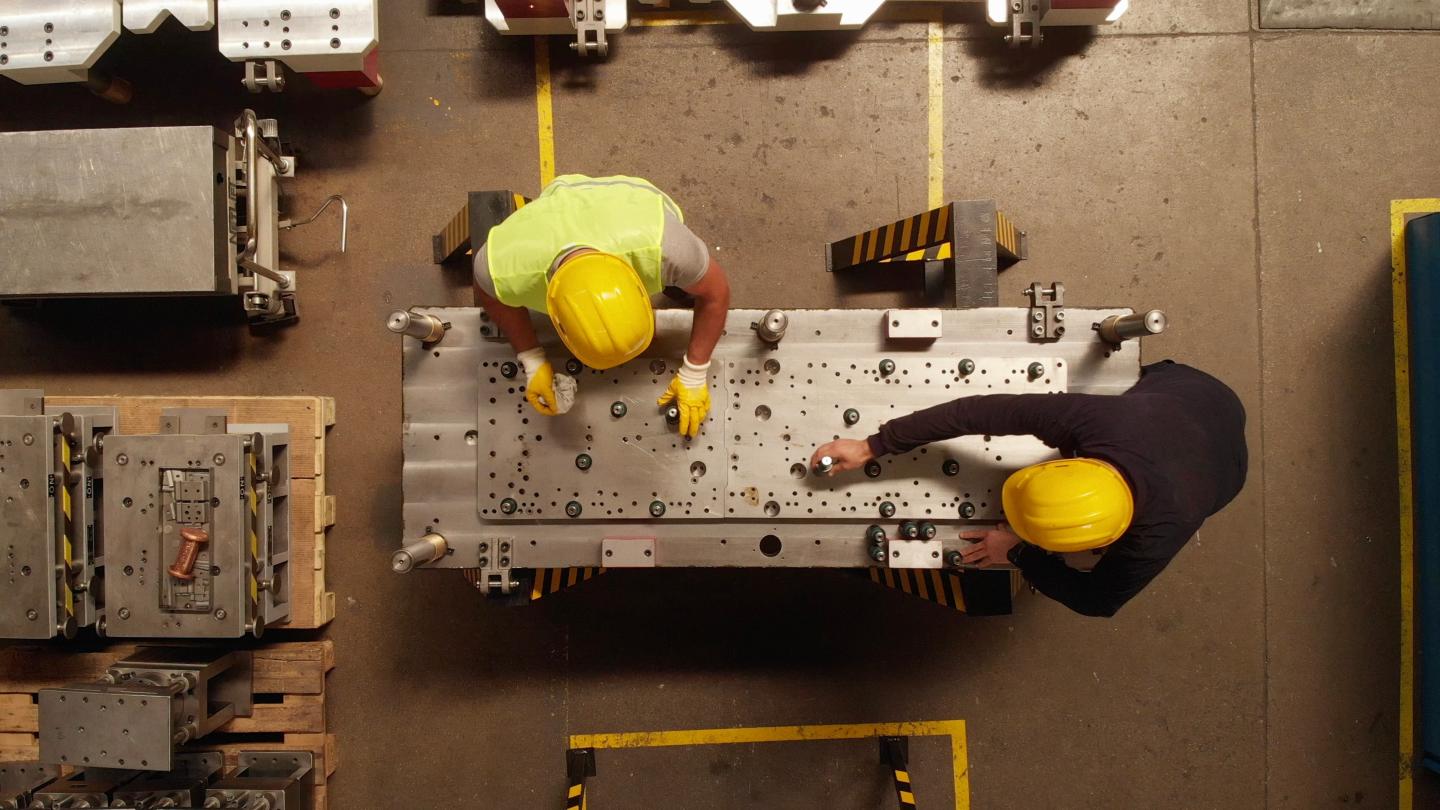
To boost the economic security of working-class Americans, President-elect Biden should adapt the “codetermination” model common in Northern Europe, writes George Tyler.
To boost the economic security of working-class Americans, President-elect Biden should adapt the “codetermination” model common in Northern Europe, writes George Tyler.(Photo courtesy of Getty Images.)
Add Fortune on Google for similar content.

A majority of the American labor force are high school graduates without college degrees. They have been falling behind economically for well more than a generation: Their median real wage has dropped 12.3% since 1979, while the median wage of those holding college degrees has increased 14.4%. Overall, barely one-third of those without college educations now earn the national median wage.   

During the presidential campaign, President-elect Biden promised relief to this demographic group with policies to change corporate behavior. Biden is spot-on in acknowledging that corporate boardrooms are accountable for America’s working-class plight. His success in fulfilling that promise hinges on how effectively he upgrades boards’ governance of U.S. corporations—by requiring them to give workers a seat at the table.

Corporate boards and wage suppression

A central practice of U.S. boards of directors since the Reagan era has been wage suppression to maximize share value. Characteristics of this shareholder capitalism include outsourcing and kneecapping collective bargaining at home while (since the maquiladora era decades ago) offshoring well-paying jobs to low-wage producers in Mexico and Asia. 

The alternative to this model is stakeholder capitalism, where corporate boards pursue policies that benefit local communities and employees in addition to shareholders. Biden embraced stakeholder capitalism in a speech in July. But he was silent on the mechanism utilized by rich democracies of Northern Europe to effectuate stakeholder capitalism—a mechanism that economists call codetermination. In codetermination, management and workers cooperate in decision-making, especially through the representation of workers on boards of directors.

Minority Leader Charles Schumer and 13 other Senate Democrats have endorsed codetermination, and rightly so: It is the only version of capitalism proven effective in improving the economics of non-college workers along with other stakeholders. Just as it has in Northern Europe, a Biden administration embrace of codetermination can transform U.S. corporate boards from predators to advocates for working-class Americans.  

Northern Europe’s working-class renaissance

Codetermination is why Northern European nations have succeeded where the U.S. has failed in creating high-wage jobs that successfully integrate non-college-educated men and women into their national economies. According to the OECD, the pay of workers in this demographic in Northern Europe is closer than that of their U.S. counterparts to national medians, and 80% to 85% of them were employed in 2017, compared to just 70% of American non-college workers that same year. 
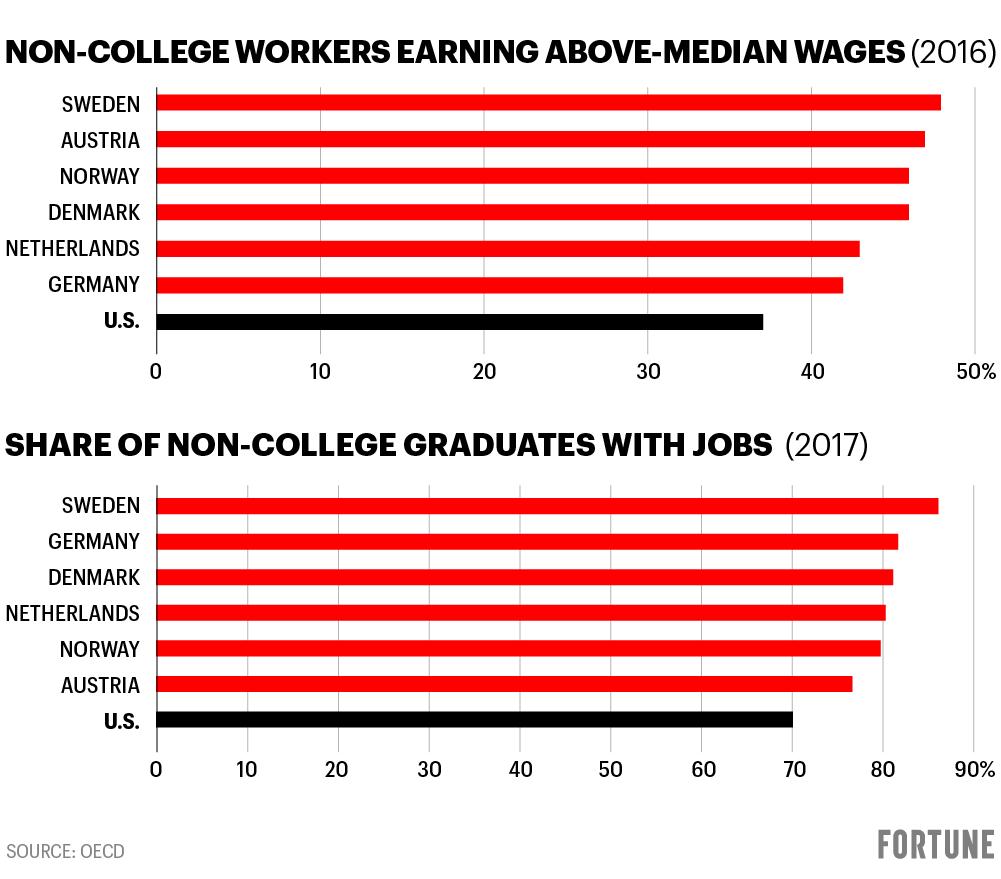
Charts show statistics on non-college workers earnings and job situation

The rich democracies of Northern Europe over the last half-century have implemented stakeholder capitalism with codetermination reforms, requiring that a hefty portion of corporate directors represent the interests of employees and local communities. In Germany, for example, 50% of directors on the boards of the largest 2,000 or so firms are elected by employees, not shareholders. At these powerful firms, which include familiar names like Adidas, Bayer, Daimler and EON, half the board members are employee representatives. Multiple analyses, including by the National Bureau of Economic Research, have affirmed that codetermination advantages workers as well as enterprise investment and bottom lines.

Codetermination has proven over many decades to be a systemic, market-based remedy to U.S.-style wage suppression. It is why wages in Germany and its neighbors across Northern Europe are higher than U.S. wages, according to the Conference Board. Moreover, their policies have resulted in a disproportionate share of output across Northern Europe being produced by high-skill industries husbanding high-wage jobs at home. The 30 largest German corporations (members of the DAX 30) sell only 21% of their global output in Germany itself, but 36% of their global workforce is there. Only 15% of Daimler sales are German, for example, but more than half of its global workforce is there. And Volkswagen sells only 9% of its output in Germany, while 40% of its global workforce is there. 

Workforces moving in opposite directions

The focus of codetermination-staffed corporate boards on high-productivity product lines has required the aggressive upskilling of domestic workforces. Because the share of college-educated workforces across Northern Europe in nations like the Netherlands (37%) is far smaller than the proportion of people employed in skilled job sectors (53%), corporations reach deep into the ranks of non-college-educated men and women for workers to upgrade. 

This stands in sharp contrast with the U.S. Habitual corporate wage suppression caused the share of jobs considered “skilled” to decline in the U.S. between the mid-1990s and mid-2010s, according to the OECD. Yet the share of such jobs rose sharply in every Northern European economy, including a huge 21.8-percentage-point jump in the Netherlands and a 20.8-point leap in France. By as early as 2006, that share across all of Northern Europe, including Norway (48%), Germany (44%), and the Netherlands (53%), had surpassed the U.S. share (39%). That transformation occurred despite the enviable edge provided by Silicon Valley and the dominant U.S. role in global information technology.
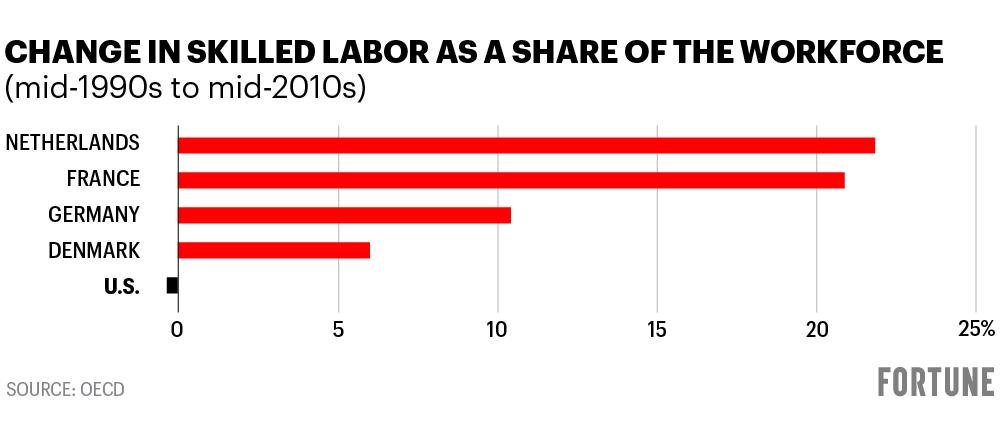
Chart shows change in skilled labor for selected countries

Worse, the downgrading of U.S. workers by corporate boards is systemic: While the share of high-skill jobs dropped, the share of all U.S. jobs classified as low-skill increased 3.3 percentage points during this span. In contrast, codetermination corporations abroad shed low-wage jobs: The low-skill share of domestic workforces declined 7.8 percentage points in the Netherlands, for instance, and 6.4 percentage points in France. 

Strengthening workers is good politics

Aside from economics, there are domestic political considerations warranting a Biden codetermination initiative. First, it responds to expectations from the Democratic Party’s most ardent supporters that the party will prioritize policies benefitting those who are economically lagging. Along with higher minimum wages, stronger collective bargaining, and college debt forgiveness, codetermination can enhance opportunity for those earning less than $100,000, union members, minorities, and youths—the party’s core, many of whom are being battered by the pandemic.

Second, codetermination is a bridge to that segment of Trump voters primarily concerned with economics rather than immigration, law and order, or social issues like abortion. That segment certainly includes numerous economically stressed non-college-educated men and women, a demographic overrepresented in U.S. counties that supported Trump in November. And it is sizable. Separate exit polling found that economics was either the most important issue influencing Trump voters, or second to fighting terrorism. Overall, 35% of voters named the economy as their top reason for selecting a candidate, and 83% of those voters voted for Trump. The characteristics that accompany codetermination—higher wages, ending job offshoring, and stronger employment—will certainly enhance their lives.    

The true test of Biden’s commitments to America’s working class and expanding the Democratic Party will be his willingness to back codetermination. Biden lauds evidence-based medical science. He should apply evidence-based economics to the plight of non-college-educated Americans.  

Codetermination stands alone as the most powerful mechanism of capitalism for improving working-class economics. It strengthens market capitalism. And it is the only option proven to expand opportunity and reduce economic inequality by reintegrating non-college-educated men and women into America’s economic mainstream.  

President-elect Biden should seize the moment.

George Tyler is a former deputy assistant treasury secretary and World Bank official. He is the author of books including Billionaire Democracy and What Went Wrong.

About the Author
By George Tyler
See full bioRight Arrow Button Icon
Add Fortune on Google for similar content.

Latest in Commentary

Finance
Lorem ipsum dolor sit amet, consectetur adipiscing elit, sed do eiusmod tempor incididunt ut labore et dolore magna aliqua. Ut enim ad minim veniam
By Fortune Editors
October 20, 2025
Finance
Lorem ipsum dolor sit amet, consectetur adipiscing elit, sed do eiusmod tempor incididunt ut labore et dolore magna aliqua. Ut enim ad minim veniam
By Fortune Editors
October 20, 2025
Finance
Lorem ipsum dolor sit amet, consectetur adipiscing elit, sed do eiusmod tempor incididunt ut labore et dolore magna aliqua. Ut enim ad minim veniam
By Fortune Editors
October 20, 2025
Finance
Lorem ipsum dolor sit amet, consectetur adipiscing elit, sed do eiusmod tempor incididunt ut labore et dolore magna aliqua. Ut enim ad minim veniam
By Fortune Editors
October 20, 2025
Finance
Lorem ipsum dolor sit amet, consectetur adipiscing elit, sed do eiusmod tempor incididunt ut labore et dolore magna aliqua. Ut enim ad minim veniam
By Fortune Editors
October 20, 2025
Finance
Lorem ipsum dolor sit amet, consectetur adipiscing elit, sed do eiusmod tempor incididunt ut labore et dolore magna aliqua. Ut enim ad minim veniam
By Fortune Editors
October 20, 2025

Most Popular

Finance
Lorem ipsum dolor sit amet, consectetur adipiscing elit, sed do eiusmod tempor incididunt ut labore et dolore magna aliqua. Ut enim ad minim veniam
By Fortune Editors
October 20, 2025
Finance
Lorem ipsum dolor sit amet, consectetur adipiscing elit, sed do eiusmod tempor incididunt ut labore et dolore magna aliqua. Ut enim ad minim veniam
By Fortune Editors
October 20, 2025
Finance
Lorem ipsum dolor sit amet, consectetur adipiscing elit, sed do eiusmod tempor incididunt ut labore et dolore magna aliqua. Ut enim ad minim veniam
By Fortune Editors
October 20, 2025
Finance
Lorem ipsum dolor sit amet, consectetur adipiscing elit, sed do eiusmod tempor incididunt ut labore et dolore magna aliqua. Ut enim ad minim veniam
By Fortune Editors
October 20, 2025
Finance
Lorem ipsum dolor sit amet, consectetur adipiscing elit, sed do eiusmod tempor incididunt ut labore et dolore magna aliqua. Ut enim ad minim veniam
By Fortune Editors
October 20, 2025
Finance
Lorem ipsum dolor sit amet, consectetur adipiscing elit, sed do eiusmod tempor incididunt ut labore et dolore magna aliqua. Ut enim ad minim veniam
By Fortune Editors
October 20, 2025
Fortune Secondary Logo
Rankings
  • 100 Best Companies
  • Fortune 500
  • Global 500
  • Fortune 500 Europe
  • Most Powerful Women
  • World's Most Admired Companies
  • See All Rankings
  • Lists Calendar
Sections
  • Finance
  • Fortune Crypto
  • Features
  • Leadership
  • Health
  • Commentary
  • Success
  • Retail
  • Mpw
  • Tech
  • Lifestyle
  • CEO Initiative
  • Asia
  • Politics
  • Conferences
  • Europe
  • Newsletters
  • Personal Finance
  • Environment
  • Magazine
  • Education
Customer Support
  • Frequently Asked Questions
  • Customer Service Portal
  • Privacy Policy
  • Terms Of Use
  • Single Issues For Purchase
  • International Print
Commercial Services
  • Advertising
  • Fortune Brand Studio
  • Fortune Analytics
  • Fortune Conferences
  • Business Development
  • Group Subscriptions
About Us
  • About Us
  • Press Center
  • Work At Fortune
  • Terms And Conditions
  • Site Map
  • About Us
  • Press Center
  • Work At Fortune
  • Terms And Conditions
  • Site Map
  • Facebook icon
  • Twitter icon
  • LinkedIn icon
  • Instagram icon
  • TikTok icon
  • YouTube icon

Latest in Commentary

k
Commentarypower
What I keep hearing from Fortune 500 CEOs: ‘We have no idea what we’re actually paying for power’
By Kiran BhatrajuJuly 21, 2026
3 hours ago
Bolt CEO Ryan Breslow
CommentaryHuman resources
The CEO who fired HR was right. About the wrong thing.
By KeyAnna SchmiedlJuly 21, 2026
3 hours ago
ford
Commentary250 Years of Innovation
Alliance for America’s Skilled Trades: Skilled trades shaped America’s past. Here’s how they can build America’s future
By Jim Farley, Linda Hubbard, Bayo Ogunlesi and Ruth PoratJuly 21, 2026
5 hours ago
Sumeet Agrawal is VP of Product Management (Data, AI Governance & Context Engineering for Agentic Systems) at Salesforce.
CommentaryAI agents
Salesforce VP on the leaky AI pipeline: why cheaper tokens won’t fix enterprise AI
By Sumeet AgrawalJuly 20, 2026
1 day ago
japan
CommentaryJapan
Japan’s monetary conundrum — why the yen hit a 40-year low as interest rates hit a 31-year high
By Steve H. Hanke and John GreenwoodJuly 20, 2026
1 day ago
ryan
CommentaryLeadership
I’ve interviewed 700 leaders. The ones outsourcing their thinking to AI lose their best people first
By Ryan HawkJuly 20, 2026
1 day ago

Most Popular

Mark Cuban says he has the solution to growing income inequality, and it's to reward every employee—from CEO to janitor—with company stock
Success
Mark Cuban says he has the solution to growing income inequality, and it's to reward every employee—from CEO to janitor—with company stock
By Sasha RogelbergJuly 20, 2026
21 hours ago
‘I want to die broke’: Billionaire philanthropist Denny Sanford dies after giving away $4 billion
Success
‘I want to die broke’: Billionaire philanthropist Denny Sanford dies after giving away $4 billion
By Sydney LakeJuly 20, 2026
1 day ago
'Dr. Doom' Nouriel Roubini says we're headed for universal basic income or 'some form of socialism' as AI revolutionizes work—He calls that optimistic
AI
'Dr. Doom' Nouriel Roubini says we're headed for universal basic income or 'some form of socialism' as AI revolutionizes work—He calls that optimistic
By Jason MaJuly 18, 2026
3 days ago
Current price of silver as of Monday, July 20, 2026
Personal Finance
Current price of silver as of Monday, July 20, 2026
By Joseph HostetlerJuly 20, 2026
1 day ago
It’s not just Taco Bell lettuce and possible glass in Pillsbury rolls: Food and drink recall events reached a 6-year year-over-year high
Retail
It’s not just Taco Bell lettuce and possible glass in Pillsbury rolls: Food and drink recall events reached a 6-year year-over-year high
By Sasha RogelbergJuly 20, 2026
1 day ago
Current price of oil as of July 20, 2026
Personal Finance
Current price of oil as of July 20, 2026
By Joseph HostetlerJuly 20, 2026
1 day ago

© 2026 Fortune Media IP Limited. All Rights Reserved. Use of this site constitutes acceptance of our Terms of Use and Privacy Policy | CA Notice at Collection and Privacy Notice | Do Not Sell/Share My Personal Information
FORTUNE is a trademark of Fortune Media IP Limited, registered in the U.S. and other countries. FORTUNE may receive compensation for some links to products and services on this website. Offers may be subject to change without notice.