• Home
  • News
  • Fortune 500
  • Tech
  • Finance
  • Leadership
  • Lifestyle
  • Rankings
  • Multimedia
CommentaryInfrastructure

Commentary: Why America Can’t Rebuild Without China

By
David J. Firestein
David J. Firestein
Down Arrow Button Icon
By
David J. Firestein
David J. Firestein
Down Arrow Button Icon
November 15, 2017, 3:11 PM ET

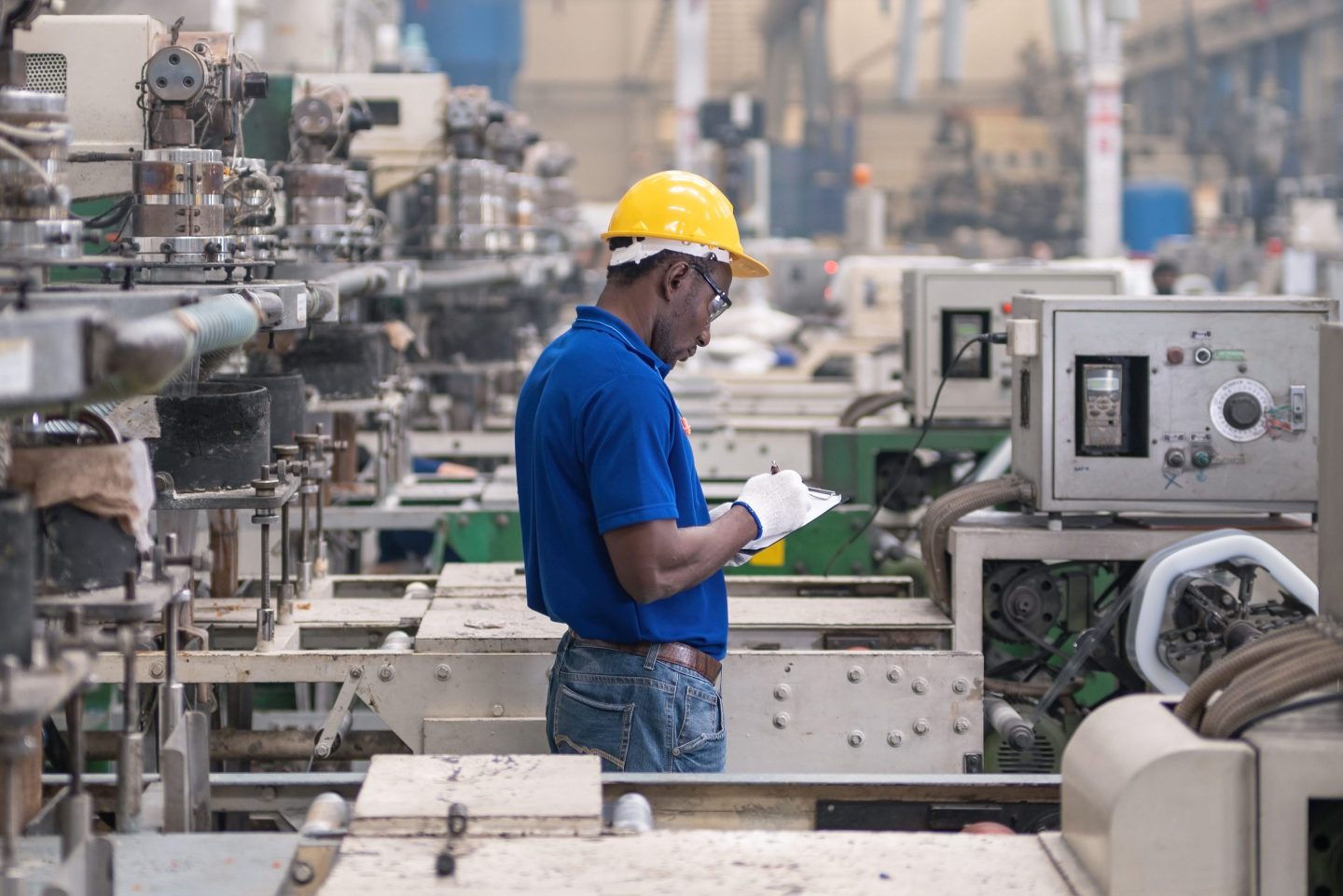
President Donald Trump has pledged to create new, good-paying jobs for millions of American blue-collar workers, principally through a still largely undefined plan to inject $1 trillion in both public and private funding into America’s infrastructure. He has promised a program of “national rebuilding” to be carried out “with American hands and American labor.”

It’s a great idea, but there’s a major problem. There is not enough ready American capital to hire all the American hands and American labor that would be required to realize this vision. That capital may have to come from somewhere unexpected: the Chinese private sector.

Even with a major infusion of capital from the U.S. private sector—and even assuming our dysfunctional permitting system is greatly streamlined—America will not be able to marshal sufficient resources over the next several years to put a perceptible dent in the estimated $4.5 trillion in needed investment for our infrastructure.

That’s where China comes in.

Some may justifiably wonder whether Chinese investment is feasible on security, economic, and political grounds.

The security bar is easily cleared. The Committee on Foreign Investment in the United States, the principal government interagency body charged with vetting foreign investments into the U.S., governs only those investments in which the foreign investor seeks an ownership stake (and, specifically, a majority ownership stake) of the entity in question. Structuring private Chinese investment in U.S. infrastructure as loans nullifies this set of concerns.

But is there is a business case for Chinese private investors to finance our infrastructure projects? Yes. While it is true that infrastructure projects tend to generate returns in the low single digits, there are reasons that such projects and returns are attractive to potential Chinese investors. The infrastructure market offers both diversification and stability relative to the existing portfolios of these potential investors. Moreover, Chinese investors view this kind of investment as having a double bottom line: It can help create a more politically sustainable economic partnership between China and the U.S., and it can transform China from being perceived in the U.S. as a job killer to a job creator.

In terms of the politics, the obvious criticism of this type of initiative would be that it would sell out America to China. The only problem with that criticism is that under the vision laid out here, nothing is being sold. Rather, Chinese private loans, along with other financing, would put American hands and American labor back to work rebuilding our roads, railways, and ports. Political leaders—at all levels and on both sides of the partisan aisle—would come away from this type of arrangement winners.

Texas provides arguably the most obvious and urgent opportunity for mutually beneficial U.S.-China infrastructure investment collaboration. The devastation that Hurricane Harvey brought to Houston and surrounding communities was staggering and could take decades to recover from fully. Bringing Chinese private capital to bear on this economically vital region’s recovery would generate several positive consequences.

First, it would help the people of the affected region more expeditiously get back on their feet economically and otherwise. This matters to China in a very direct way because Texas is one of the largest state traders with China, and Houston is the state’s (and the Gulf Coast’s) largest port. Second, it would put the greater Houston area even more squarely on the map of potential Chinese investors and Chinese leadership, potentially generating additional business deals that could generate significant employment for Texans across the region. And third, such an overture could help move U.S.-China relations in a direction that is beneficial for both countries.

Welcoming major Chinese investment in U.S. infrastructure would go a long way toward advancing a top presidential policy priority. It could put millions of American blue-collar workers back to work in solid jobs and deepen and stabilize U.S.-China relations in ways that are consistent with our law and policy. The jobs need to be American; the capital that creates them does not.

David J. Firestein is the founding executive director of the China Public Policy Center in the LBJ School of Public Affairs at The University of Texas at Austin.

About the Author
By David J. Firestein
See full bioRight Arrow Button Icon

Latest in Commentary

Steve Milton is the CEO of Chain, a culinary-led pop-culture experience company founded by B.J. Novak and backed by Studio Ramsay Global.
CommentaryFood and drink
Affordability isn’t enough. Fast-casual restaurants need a fandom-first approach
By Steve MiltonDecember 5, 2025
17 hours ago
Paul Atkins
CommentaryCorporate Governance
Turning public companies into private companies: the SEC’s retreat from transparency and accountability
By Andrew BeharDecember 5, 2025
17 hours ago
Matt Rogers
CommentaryInfrastructure
I built the first iPhone with Steve Jobs. The AI industry is at risk of repeating an early smartphone mistake
By Matt RogersDecember 4, 2025
2 days ago
Jerome Powell
CommentaryFederal Reserve
Fed officials like the mystique of being seen as financial technocrats, but it’s time to demystify the central bank
By Alexander William SalterDecember 4, 2025
2 days ago
Rakesh Kumar
CommentarySemiconductors
China does not need Nvidia chips in the AI war — export controls only pushed it to build its own AI machine
By Rakesh KumarDecember 3, 2025
3 days ago
Rochelle Witharana is Chief Financial and Investment Officer for The California Wellness Foundation
Commentarydiversity and inclusion
Fund managers from diverse backgrounds are delivering standout returns and the smart money is slowly starting to pay attention
By Rochelle WitharanaDecember 3, 2025
3 days ago

Most Popular

placeholder alt text
Economy
Two months into the new fiscal year and the U.S. government is already spending more than $10 billion a week servicing national debt
By Eleanor PringleDecember 4, 2025
2 days ago
placeholder alt text
Success
‘Godfather of AI’ says Bill Gates and Elon Musk are right about the future of work—but he predicts mass unemployment is on its way
By Preston ForeDecember 4, 2025
2 days ago
placeholder alt text
Success
Nearly 4 million new manufacturing jobs are coming to America as boomers retire—but it's the one trade job Gen Z doesn't want
By Emma BurleighDecember 4, 2025
2 days ago
placeholder alt text
Success
Nvidia CEO Jensen Huang admits he works 7 days a week, including holidays, in a constant 'state of anxiety' out of fear of going bankrupt
By Jessica CoacciDecember 4, 2025
2 days ago
placeholder alt text
Real Estate
‘There is no Mamdani effect’: Manhattan luxury home sales surge after mayoral election, undercutting predictions of doom and escape to Florida
By Sasha RogelbergDecember 4, 2025
2 days ago
placeholder alt text
Economy
Tariffs and the $38 trillion national debt: Kevin Hassett sees ’big reductions’ in deficit while Scott Bessent sees a ‘shrinking ice cube’
By Nick LichtenbergDecember 4, 2025
2 days ago
Rankings
  • 100 Best Companies
  • Fortune 500
  • Global 500
  • Fortune 500 Europe
  • Most Powerful Women
  • Future 50
  • World’s Most Admired Companies
  • See All Rankings
Sections
  • Finance
  • Leadership
  • Success
  • Tech
  • Asia
  • Europe
  • Environment
  • Fortune Crypto
  • Health
  • Retail
  • Lifestyle
  • Politics
  • Newsletters
  • Magazine
  • Features
  • Commentary
  • Mpw
  • CEO Initiative
  • Conferences
  • Personal Finance
  • Education
Customer Support
  • Frequently Asked Questions
  • Customer Service Portal
  • Privacy Policy
  • Terms Of Use
  • Single Issues For Purchase
  • International Print
Commercial Services
  • Advertising
  • Fortune Brand Studio
  • Fortune Analytics
  • Fortune Conferences
  • Business Development
About Us
  • About Us
  • Editorial Calendar
  • Press Center
  • Work At Fortune
  • Diversity And Inclusion
  • Terms And Conditions
  • Site Map

© 2025 Fortune Media IP Limited. All Rights Reserved. Use of this site constitutes acceptance of our Terms of Use and Privacy Policy | CA Notice at Collection and Privacy Notice | Do Not Sell/Share My Personal Information
FORTUNE is a trademark of Fortune Media IP Limited, registered in the U.S. and other countries. FORTUNE may receive compensation for some links to products and services on this website. Offers may be subject to change without notice.