• Home
  • Latest
  • Fortune 500
  • Finance
  • Tech
  • Leadership
  • Lifestyle
  • Rankings
  • Multimedia

Trendingnow

1

Jensen Huang made his $172 billion fortune on AI chips. His family's $75 million gift to Vanderbilt argues art decides what technology is for

2

'The demographic dividend of the last 40 years is ending': J.P. Morgan says the world is running out of the two things that kept interest rates down

3

The $39 trillion U.S. national debt isn’t as high as Japan’s and Singapore’s relative to economy size—and yet it's still worse somehow

1

Jensen Huang made his $172 billion fortune on AI chips. His family's $75 million gift to Vanderbilt argues art decides what technology is for

2

'The demographic dividend of the last 40 years is ending': J.P. Morgan says the world is running out of the two things that kept interest rates down

3

The $39 trillion U.S. national debt isn’t as high as Japan’s and Singapore’s relative to economy size—and yet it's still worse somehow

Why 2014 is not the year of wearables

By
Courtney Subramanian
Down Arrow Button Icon
By
Courtney Subramanian
Down Arrow Button Icon
June 20, 2014, 4:18 PM ET
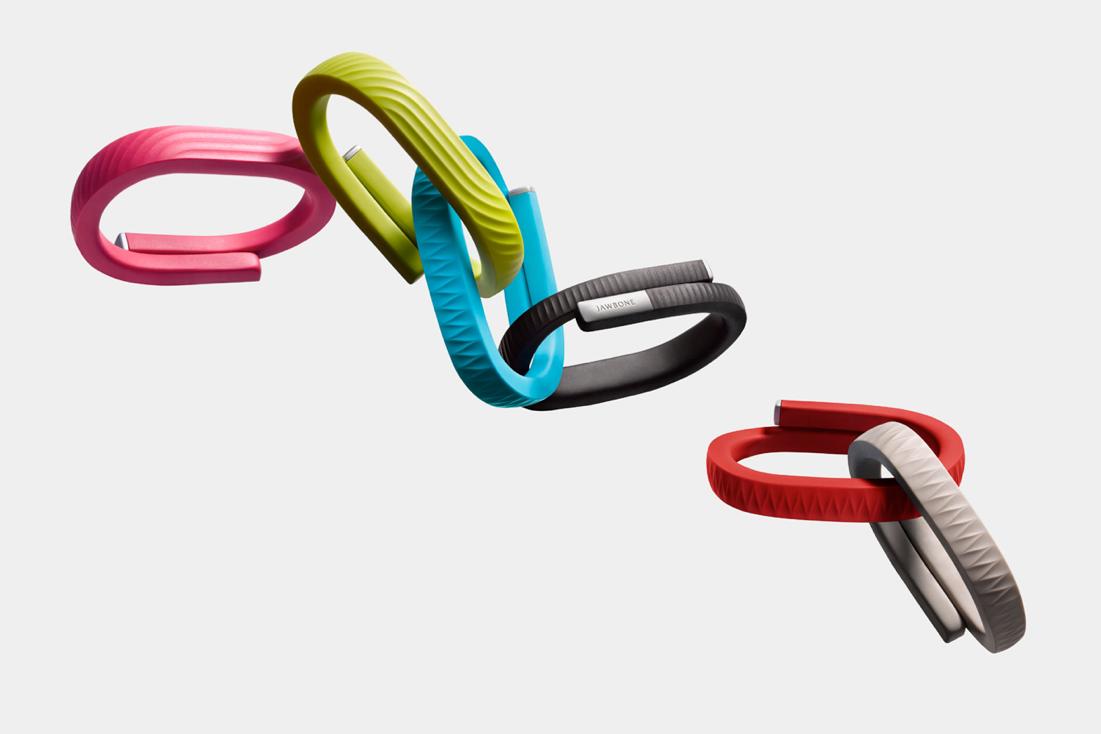
Jawbone's Up wristband.
Jawbone's Up wristband.Photo courtesy Jawbone
Add Fortune on Google for similar content.

As early as 2008, wearable technology—which can range in anything from measuring your heart rate to curating music based on your mood—has been touted as the next big moment in consumer electronics.

In the wake of the Fitbit and Google’s (GOOG) Glass, a flurry of companies has flooded the market with iterations of sensor-laden armbands, apparel, and eyewear. It’s a buzzy category, but early adopters seem to be waiting for a moment when they are no longer that guy. (You know. The “Glasshole.”)

But that moment, try as Google might, has yet to come. Some reports have named 2014 as the year when wearable devices will hit the mainstream, but a newer study from L2, a digital research firm, confirms what many have been quietly fighting for: wearables are still not socially acceptable, creating a significant hurdle to further sales.

According to the study, 75% of consumers are aware of wearable technology (whether as futuristic fashion or new-age tech tool), but only 9% actually have any interest in wearing it. A meager 2% admitted to owning a wearable tech device, most of which consist of fitness trackers and smart watches, according to the study.

Wearables typically fall into three categories: complex devices such as fitness trackers; smart accessories such as smart watches, defined by their ability to run third-party applications; and fully autonomous smart wearables that connect directly to the Internet, such as Google’s Glass headset.

Estimates vary, but the research firm IDC projects that wearable tech will exceed 19 million units this year—more than triple last year’s sales—and will soar to 111.9 million units by 2018. Credit Suisse values the industry at somewhere between $30 billion and $50 billion in the next two to four years. But before that happens, the nascent market has that pesky wouldn’t-be-caught-dead-wearing-it hurdle to clear.

The June announcement of collaboration between Google and fashion designer Diane von Furstenberg to create a new line of Google Glass underscored Silicon Valley’s current strategy to enlist the fashion elite to sanction wearables as de rigueur.

The line of prescriptive frames and sunglasses, named “DVF | Made for Glass,” costs upwards of $1,600. Google has already partnered with Luxottica, the eyewear conglomerate behind Ray-Ban and several high-fashion eyewear offerings such as Prada. It also hired fashion executive Ivy Ross, most recently the chief marketing officer of Art.com, to lead its Glass team.

The company is hardly alone in its efforts to woo talent of a different sort. Earlier this year Intel announced a collaboration with the Council of Fashion Designers of America, or CFDA, kicking off a partnership with the high-concept retailer Opening Ceremony to design its smart bracelet. Tory Burch partnered with Fitbit to design pendants and bracelets akin to the Shine Tracker by Misfit Wearables. And Apple (AAPL) has tapped a diverse group of people, including former Burberry chief executive Angela Ahrendts (to lead its retail efforts), former Yves Saint Laurent CEO Paul Deneve, and former Nike (NKE) design director Ben Shaffer.

These collaborations signal a moment where the cradle of innovation and the arbiters of fashion are finally embracing one another, says L2 research director Colin Gilbert. Style is not the only missing piece to the wearable puzzle, but it’s something to look forward to, Gilbert says. More than half of the report’s respondents want devices that feel more like jewelry while 62 percent would like more than wrist-worn devices.

“Brands that are known for going it alone are partnering with unexpected allies,” Gilbert says. “If you dig into Apple’s investment, the special projects team reads like a who’s who list of some of the best talent in the world coming from every sector imaginable.”

The “cool” factor isn’t the only issue. Security and privacy, particularly around the management of consumer data, remain a concern as the tech industry seeks to bring more of our body parts online. As The Economist notes, the glamour of developing sensors and algorithms for wearables is distracting everyone from glaring missing elements, “standards, interoperability, integration and data management” and “intellectual-property rights and regulatory compliance” among them. All this in an environment where paranoia remains over the National Security Administration’s activities.

Atlas Wearables founder Peter Li says battery technology and user retention are two more obstacles facing the wearables market. Some use cases require significant improvements to battery technology for a compelling experience, he says, and there’s always a balance to be struck between wear time between charges and processing power and features.

The pace of innovation has been rapid. Fitbit has released five or six distinct models since the company launched in 2008, and Samsung released three or four variants of the Galaxy Gear in a nine-month period. Sony (SNE), Pebble, Google, and Facebook’s (FB) Oculus Rift are positioned to follow.

“It’s very easy to see the leaders in the current market are in a fairly tenuous or precarious position right now,” Gilbert says. “That’s evident by how quickly they’re innovating on each new device type.”

Interest in wearable technology isn’t limited to technology companies. Mercedes-Benz is porting its mobile experience to a wearable device, while Virgin Atlantic is exploring the customer service aspect of Google Glass on a trial basis. Kenneth Cole is also using Glass as part of a marketing campaign.

Continued experimentation with wearables is important, but the near-term requires a conversation “about whether current wearables, driven by a combination of organic efforts and corporate tech efforts, are really adhering to customer needs and wants or if companies need to explore a different set of partnerships to push wearables beyond early adopters and into the mainstream,” Gilbert says.

The winter holiday season will help thin the herd, but the true litmus test will be when a company can introduce a wearable that passes the “turnaround test,” Gilbert says—when a person walks a few steps from their front door and decides to turn around to retrieve a forgotten wearable device like they would a forgotten wallet, keys, or phone.

“Right now the fitness tracker isn’t on that list,” he says, “but the next generation of wearables has the potential to pass that critical milestone.”

About the Author
By Courtney Subramanian
See full bioRight Arrow Button Icon
Add Fortune on Google for similar content.

Latest in

Finance
Lorem ipsum dolor sit amet, consectetur adipiscing elit, sed do eiusmod tempor incididunt ut labore et dolore magna aliqua. Ut enim ad minim veniam
By Fortune Editors
October 20, 2025
Finance
Lorem ipsum dolor sit amet, consectetur adipiscing elit, sed do eiusmod tempor incididunt ut labore et dolore magna aliqua. Ut enim ad minim veniam
By Fortune Editors
October 20, 2025
Finance
Lorem ipsum dolor sit amet, consectetur adipiscing elit, sed do eiusmod tempor incididunt ut labore et dolore magna aliqua. Ut enim ad minim veniam
By Fortune Editors
October 20, 2025
Finance
Lorem ipsum dolor sit amet, consectetur adipiscing elit, sed do eiusmod tempor incididunt ut labore et dolore magna aliqua. Ut enim ad minim veniam
By Fortune Editors
October 20, 2025
Finance
Lorem ipsum dolor sit amet, consectetur adipiscing elit, sed do eiusmod tempor incididunt ut labore et dolore magna aliqua. Ut enim ad minim veniam
By Fortune Editors
October 20, 2025
Finance
Lorem ipsum dolor sit amet, consectetur adipiscing elit, sed do eiusmod tempor incididunt ut labore et dolore magna aliqua. Ut enim ad minim veniam
By Fortune Editors
October 20, 2025

Most Popular

Finance
Lorem ipsum dolor sit amet, consectetur adipiscing elit, sed do eiusmod tempor incididunt ut labore et dolore magna aliqua. Ut enim ad minim veniam
By Fortune Editors
October 20, 2025
Finance
Lorem ipsum dolor sit amet, consectetur adipiscing elit, sed do eiusmod tempor incididunt ut labore et dolore magna aliqua. Ut enim ad minim veniam
By Fortune Editors
October 20, 2025
Finance
Lorem ipsum dolor sit amet, consectetur adipiscing elit, sed do eiusmod tempor incididunt ut labore et dolore magna aliqua. Ut enim ad minim veniam
By Fortune Editors
October 20, 2025
Finance
Lorem ipsum dolor sit amet, consectetur adipiscing elit, sed do eiusmod tempor incididunt ut labore et dolore magna aliqua. Ut enim ad minim veniam
By Fortune Editors
October 20, 2025
Finance
Lorem ipsum dolor sit amet, consectetur adipiscing elit, sed do eiusmod tempor incididunt ut labore et dolore magna aliqua. Ut enim ad minim veniam
By Fortune Editors
October 20, 2025
Finance
Lorem ipsum dolor sit amet, consectetur adipiscing elit, sed do eiusmod tempor incididunt ut labore et dolore magna aliqua. Ut enim ad minim veniam
By Fortune Editors
October 20, 2025
Fortune Secondary Logo
Rankings
  • 100 Best Companies
  • Fortune 500
  • Global 500
  • Fortune 500 Europe
  • Most Powerful Women
  • World's Most Admired Companies
  • See All Rankings
  • Lists Calendar
Sections
  • Finance
  • Fortune Crypto
  • Features
  • Leadership
  • Health
  • Commentary
  • Success
  • Retail
  • Mpw
  • Tech
  • Lifestyle
  • CEO Initiative
  • Asia
  • Politics
  • Conferences
  • Europe
  • Newsletters
  • Personal Finance
  • Environment
  • Magazine
  • Education
Customer Support
  • Frequently Asked Questions
  • Customer Service Portal
  • Privacy Policy
  • Terms Of Use
  • Single Issues For Purchase
  • International Print
Commercial Services
  • Advertising
  • Fortune Brand Studio
  • Fortune Analytics
  • Fortune Conferences
  • Business Development
  • Group Subscriptions
About Us
  • About Us
  • Press Center
  • Work At Fortune
  • Terms And Conditions
  • Site Map
  • About Us
  • Press Center
  • Work At Fortune
  • Terms And Conditions
  • Site Map
  • Facebook icon
  • Twitter icon
  • LinkedIn icon
  • Instagram icon
  • TikTok icon
  • YouTube icon

Latest in

Photo of ballots being counted and sorted
PoliticsElections
Nearly 150,000 California mail ballots rejected in June primary, a record high thanks to late-arriving ballots
By The Associated Press and MIchael R. BloodJuly 24, 2026
3 hours ago
Photo of the nun
North AmericaImmigration
Nun detained by ICE on her way to Mass speaks out for first time: ‘For me, a nun, not to go to Mass…it was very, very heartbreaking’
By The Associated Press, Valerie Gonzalez and Jamie StengleJuly 24, 2026
3 hours ago
Court illustration of the author testifying
LawTerrorism
Salman Rushdie describes a ‘lake of blood’ as his convicted attacker faces terrorism charges tied to the 2022 stabbing
By The Associated Press, John Wawrow and Jennifer PeltzJuly 24, 2026
3 hours ago
A gun lays on a table next to a row of ammunition.
Lawgun control
Two gun rights groups are suing the U.S. Virgin Islands over concealed carry for nonresidents
By The Associated Press and Danica CotoJuly 24, 2026
3 hours ago
Vice President JD Vance sits in on a meeting.
North AmericaJD Vance
The Secret Service is investigating a member of JD Vance’s detail over a suspected news leak
By The Associated PressJuly 24, 2026
3 hours ago
Google logo is displayed on a smartphone in front of the EU Flag.
CybersecurityGoogle
EU strikes Google with $1 billion fine in major crackdown on antitrust regulations even as Trump threatens retaliation
By The Associated Press and Sam McNeilJuly 24, 2026
3 hours ago

Most Popular

Jensen Huang made his $172 billion fortune on AI chips. His family's $75 million gift to Vanderbilt argues art decides what technology is for
Big Tech
Jensen Huang made his $172 billion fortune on AI chips. His family's $75 million gift to Vanderbilt argues art decides what technology is for
By Sydney LakeJuly 23, 2026
2 days ago
'The demographic dividend of the last 40 years is ending': J.P. Morgan says the world is running out of the two things that kept interest rates down
Economy
'The demographic dividend of the last 40 years is ending': J.P. Morgan says the world is running out of the two things that kept interest rates down
By Eleanor PringleJuly 24, 2026
16 hours ago
The $39 trillion U.S. national debt isn’t as high as Japan’s and Singapore’s relative to economy size—and yet it's still worse somehow
Economy
The $39 trillion U.S. national debt isn’t as high as Japan’s and Singapore’s relative to economy size—and yet it's still worse somehow
By Sasha RogelbergJuly 23, 2026
1 day ago
The millennial generation has split, new Fed research shows: Those over 35 are edging toward boomer-style wealth, while everyone else falls behind
Real Estate
The millennial generation has split, new Fed research shows: Those over 35 are edging toward boomer-style wealth, while everyone else falls behind
By Nick LichtenbergJuly 22, 2026
2 days ago
Current price of oil as of July 24, 2026
Personal Finance
Current price of oil as of July 24, 2026
By Joseph HostetlerJuly 24, 2026
14 hours ago
Turns out Dead Internet Theory was right: AI agents are eating the Web, growing by nearly 8,000% and rewiring the Internet's business model
AI
Turns out Dead Internet Theory was right: AI agents are eating the Web, growing by nearly 8,000% and rewiring the Internet's business model
By Mia OsmonbekovJuly 23, 2026
1 day ago

© 2026 Fortune Media IP Limited. All Rights Reserved. Use of this site constitutes acceptance of our Terms of Use and Privacy Policy | CA Notice at Collection and Privacy Notice | Do Not Sell/Share My Personal Information
FORTUNE is a trademark of Fortune Media IP Limited, registered in the U.S. and other countries. FORTUNE may receive compensation for some links to products and services on this website. Offers may be subject to change without notice.